
Thursday, December 4, 2025
In the aftermath of COP30 in Brazil: The limits to intergovernmental processes


Sunday, September 28, 2025
The Wild Side of Japan
Beyond the neon skylines, crowded subways, and hi-tech innovations lies another Japan – a wilder world of mountains, forests, and rice paddies that reveal the country’s deep relationship with nature.

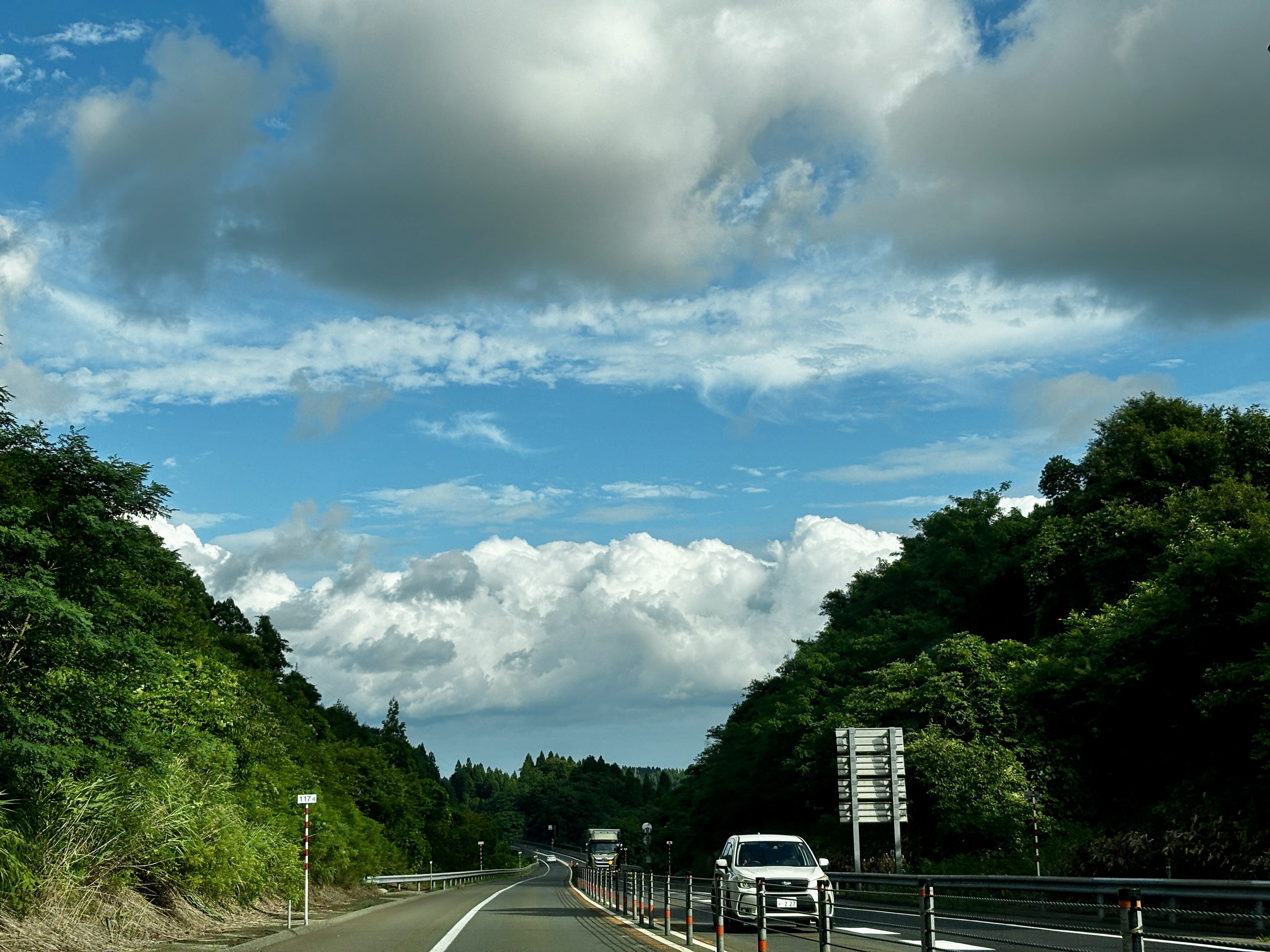
The hills are shaped like traffic cones, except that they’re green. Many of them reach up to over 1,000 meters; the tallest ones nearly 3,000 meters. They stand on both sides of the road – Akita Expressway – blocking any view beyond them except for the sky, which that day was overcast. The forested slopes look virtually impenetrable. There are signs warning of mountain goats, tanuki-raccoon dogs – and bears – along the roadside.
Tohoku, consisting of the northern prefectures on the main island of Honshu, has been called the wild side of Japan. If Japan conjures up images of avant-garde high-rises, hi-tech attractions, and people in dark suits or outrageous anime costumes rushing at subway stations, then you should visit Tohoku. It is another world up here.
We were speeding through the mountains in Kikuchi-san’s Daihatsu Cocoa overtaking many larger vehicles as she pushed the little car to 120 kph. Mami, which is her name, is a hotelier and restaurateur in Iwate and a dear old friend of my wife Yoko. She was taking us from their mutual hometown of Oshu to Akita City in the adjacent prefecture with the same name. The road cut across the north-south mountain range that forms the backbone of Honshu, from Iwate Prefecture in the east to Akita Prefecture in the west, from the Pacific ocean to the Sea of Japan coast. Cutting through the mountains can be taken literally: there are about ten tunnels, most of them short but a few about 2.5 km long. Altogether, one spends more than 10 km driving under the huge mountain masses. What an engineering feat it has been to construct these tunnels!
In between, the road rises to higher ground and occasional bridges cross fertile valleys in the shadow of the steep mountains. These valleys are intensively utilized for farming. Small clusters of farmhouses are surrounded by green rice paddies.
Rice is the staple in Japan. But it is also more than just food, as the anthropologist Emiko Tierney Ohnuki explains in her book, Rice as Self: “As a metaphor of self, rice paddies are our ancestral land, our village, our region, and ultimately, our land, Japan. They also represent our pristine past before modernity and foreign influences contaminated it” (p. 10). Later she explains, “The notion that each rice grain has a soul and that rice is alive in the hull are fundamental to the meanings assigned to rice in Japanese culture…” (p. 55). The rice paddies prevail even as the countryside empties of people and the farming population ages. This phenomenon also explains the widespread resistance to foreign rice by Japanese consumers, even as rice prices have soared this year and been a major contributor to rising inflation.
Tohoku, with its relatively cold climate, has experienced several rice famines in the recorded history, many of them linked to natural disasters, such as cooling climate after volcanic eruptions. Latest in 1934, the rice crop in Iwate failed due to cold weather, causing many poor farm families to send their children to Tokyo and beyond as laborers, or to work in the water trade, or to join the military, all of which contributed to the pre-war unrest. In better times, Tohoku rice is arguably the best in the world, thanks to the clean environment and water.
Japan’s environmental history is at best checkered. The case of mercury poisoning in Minamata on the southwestern island of Kyushu starting in the late 1950s is perhaps the most famous incident of industrial pollution with dramatic consequences to people’s health. But there were plenty of others where the environment and human health were sacrificed to the altar of progress in post-war Japan, such as the Itai-Itai disease caused by cadmium poisoning discovered in 1967 or the PCB poisoning in and around Kitakyushu the year after. Opposition to industrial pollution was silenced, communities divided, and victims shunned, as the country focused on rebuilding and getting rich at any cost.
Since those years, much has been done to improve the environment. Environmental consciousness is high: practically no one litters, recycling is religiously practiced, and the cities are clean. Air and water pollution are now controlled. The largest urban conglomerations – Tokyo, Yokohama, Osaka, Kobe, Kyoto – are concentrated in the Central and Western Kanto and Kansai areas.
The Japanese culture has been largely based on the desire to control nature. This has its traditional expression in Japanese gardens in which nature has been forced into beautiful, but artificial depictions of, well, idealized nature. The tortured, but gorgeous bonsai trees are another example. For many Japanese, nature is at its most beautiful when it is well regimented.
Another factor playing into the tendency to control nature is the prevalence of natural hazards. Japan consists of a chain of volcanic islands in the middle of the largest ocean of the world, the Pacific. The country is prone to earthquakes that happen daily (although larger ones are of course rarer). Despite its name, the ocean frequently acts in ways anything but pacific, sending typhoons and tsunamis to the coasts. The eruption of the iconic volcano, Mt. Fuji, is long overdue. If a natural hazard exists, Japan is bound to have it in quantities. Consequently, Japan is also the best prepared nation towards natural hazards: even massive earthquakes tend to have relatively few victims.
There are exceptions, the most prominent one in recent history being the earthquake that hit Tohoku on the Pacific side on March 11, 2011. The 9.1 magnitude earthquake and the ensuing tsunami flattened out much of the Sanriku coastal zone in Miyagi and Iwate prefectures and killed almost 20,000 people. The tsunami also caused the meltdown of the Fukushima nuclear power plant resulting in the worst nuclear accident in human history, barring the Chernobyl accident in current-day Ukraine in 1986.
Up in in the mountains between Iwate and Akita, nature is largely unspoiled thanks to a low density of human population, little urbanization and even less industry. That in itself is largely the result of the mountainous topography, the harsh winters, and the relatively short growing season. Yet, virtually all flat valleys are under cultivation.
The topography is also what has saved Japan’s forests. This is one of the most forested countries in the world outside of the tropics, with 67% of land area covered in forests. Japan in the post-World War II years extensively replanted forests, with species like sugi and the Japanese cypress. According to environmental historian Catherine Knight, about 40% of Japan’s forests are currently man-made plantations, not naturally occurring ecosystems.
The forests would most certainly have been decimated had it been easier and more economical to exploit them. Instead, it is said that Japan has outsourced deforestation, especially to Southeast Asia where its companies have long maintained logging operations thereby saving the forests on the home islands.
What is evident even up here in Tohoku is the careful management of natural hazards and nature itself. Mountainsides where roads cross them are protected by engineering works to prevent landslides, which can be caused by earthquakes or just erosion of the slopes.
Japan has been referred to as the “construction state.” The Ministry of Construction and the numerous big and small companies operating in the sector wield significant power. They provide substantial employment and spend remarkable amounts of money as they fix the real and sometimes self-created problems.
In the decades following World War II, most rivers in Japan, notably near urban centers on the Kanto Plain, were straightened and channelized in concrete to control natural flow and meandering. Contrary to expectations, however, these works meant for flood control often had the opposite effect, while also harming ecosystems along the rivers. The government, to a degree, recognized the mistakes and mended its ways, leading the River Bureau of the Ministry of Land, Infrastructure, Transport and Tourism to reverse engineer riverine habitats since the 1990s. Today, Tohoku’s largest river – and to me the dearest – Kitakami-gawa flows quite freely from its origins at Mt. Nanashigure to the Pacific Ocean.
But the time of the construction follies is not over. Following the March 2011 earthquake and tsunami, which destroyed virtually all small fishing ports on the Sanriku coast, many survivors left. Especially younger people moved to Sendai and other cities. Few of the refugees had any intention to return to the coast. Given this and the fact that the tsunami threat will not disappear, to me the sensible thing would have been to develop the coastline to an area for nature and recreation. Instead, the government has invested tremendous amounts of resources to massive earth moving and construction works to raise the coastline, in the process destroying much of the nature literally flattening hills. This for a handful of mostly old people who may return. That just demonstrates the natural tendency of the authorities and the construction industry to find an engineering solution to any problem.
Driving through the central mountains, however, these problems are far away. Yet, just like Sanriku coast, the countryside in the remote sparsely populated areas is further emptying. Most of the young people have moved to cities and the small farmers have few heirs to take over their plots (although there is a small back-to-the-land movement driving some younger urbanites to a more organic lifestyle in the rural areas). One might think that depopulation might lead to rewilding of the land – a popular concept in some parts of Europe – and there may be some benefits to the wildlife. However, the traditional farming system – satoyama – is surprisingly well adapted to the natural ecosystem. The rice paddies themself are ecotopes of their own, with a vibrant fauna and flora. There are studies that suggest that losing this agricultural landscape is a threat to the biodiversity that has evolved in them.
Japan is making measurable progress on climate and environmental fronts and is rolling out a nature-positive economy strategy, which includes the “30 by 30” conservation target, aiming to protect 30% of land and marine regions by 2030. Yet, challenges remain, not least as global temperatures rise affecting climate and weather in this island nation.
Tohoku’s rugged landscapes remind us that Japan’s story is not just one of futuristic glory and control of the environment, but of coexistence with nature, which offers lessons in resilience and balance that Japan, and the world, will need more than ever.
Sunday, July 20, 2025
You haven't seen the last of meat
While veganism trends in headlines and health blogs, the global appetite for meat remains strong.

On Father’s Day evening we walked around in our Maryland neighborhood. Every restaurant serving steak was full and some even had long lines outside. Wait, but isn’t everyone turning vegan? I thought people these days watch you disapprovingly if you order a steak. Well, no, not really. For better or worse, meat consumption is on the rise.
It is sometimes said that, apart from not bringing new people to the planet, the best thing an individual can do to fight climate change is to stop eating meat. Raising cattle is the least effective way of producing calories. It takes about 6 kg of feed to produce 1 kg of beef. That’s not an efficient conversion ratio. We hear that the world’s largest wetland, Pantanal, and the Amazon rainforest are being decimated by the expansion of farms and cattle ranching. Both areas are reservoirs of incredible and unique biological diversity. Only three agricultural commodities—beef, palm oil, and soybeans—are responsible for almost 80% of tropical deforestation. Most of the soy isn’t served as edamame or go to make tofu, but to feeding the farm animals.
Pork and lamb are not much better than beef. Chicken have a smaller carbon footprint, as might be suspected from their tiny scrawny feet, but there are more than 26.5 billion of them on the planet (that’s more than 3 chicken for each human being alive today). We also read in magazines about how we will in the future get our protein from insects and seaweed. And there are all the medical studies linking consumption of red meat and especially processed meats to increased risk of cancer, cardiovascular diseases, obesity, and general unhappiness.
These facts have led a number of people to decide that they should become vegetarian. Many of these people think that also other people should follow their virtuous example. There’s not only the climate to protect but there’s the ethical problem of how we treat our non-human relatives. Most of us have friends who have become vegetarian, even vegan, and they like to share their reasons for doing so and why you should join the club.
But is the vegetarian wave really happening? Data does not suggest so. The US industry’s Power of Meat report documents that total meat sales in the country grew to $104.3 billion in 2024, which translated to a 2.3% increase in the volume sold. According to the same survey, 73% of consumers consider meat to be a healthy choice.
Worldwide trends are similar, but with important nuances. Globally, meat consumption grew by less than 1% between 2008 and 2017. This growth seems to have leveled off in most of the rich world and even declining in a few countries, such as Belgium, the countries of the northern Mediterranean, and Canada. This most likely reflects changing attitudes due to environmental and health concerns. There’s also a broader trend from red meat towards chicken.
The picture is quite different elsewhere. The traditional beef countries, like Argentina and Brazil are still growing their consumption, but not as much as neighboring Colombia and Peru. Carnivorous habits seem to be spreading in much of the developing world as a consequence of rising standards of living. China, with its more than 1 billion people, leads this trend, but other Asian countries, like Vietnam, Myanmar and Sri Lanka are increasing their consumption even faster. Similarly in African countries like Malawi, Chad, Congo, Benin and Guinea consumption of meat has risen significantly in recent years.
The only places outside of the above-mentioned wealthy countries where meat consumption is down are countries where poverty, conflict and fragility have rendered large portions of the population highly vulnerable and unable to afford meat. These include Lebanon, Ethiopia, Sudan, Djibouti, Madagascar and Niger, as well as Venezuela where policy failure has rendered meat unaffordable to most people.
What can we conclude from this? First, the vegetarian trends may not be as pervasive as one might assume from the media coverage. They may be mostly limited to wealthy people concerned with planetary health and animal welfare, as well as their own healthiness. Of course, the world’s most populous country, India, is predominantly vegetarian. In my prosperous slice of the Mid-Atlantic seaboard, vegetarian and vegan restaurants seem to be thriving, although casual observation would suggest that the clientele are predominantly women.
For poorer Americans, the cheapest way of filling their stomachs is visiting a fast-food restaurant where burgers and fries effectively provide plentiful calories. Besides, in many neighborhoods it is very difficult to even get fresh vegetables. These food deserts only have corner bodegas serving low-income and often historically marginalized populations.
As for people in poor countries, can we really expect them to forego meat after we in the West have overindulged in it for decades? For many people meat has been—and still remains—a luxury. Now when incomes are rising, people can finally afford to eat what they want and add tasty tidbits to their nutrition. Then we come and tell them that they shouldn’t.
This is a parallel to other ways in which we in the rich West are trying to limit greenhouse gas emissions by our brethren in poor countries that never contributed much to climate warming in the first place. Rising living standards call for increased energy use. Turning vegetarian is still pretty much an obsession of those of us who can afford to shop for alternatives and worry about food-related health issues. I for one should definitely reduce my calorie intake.
My prediction is that meat consumption will continue to increase for some time to come. Note that this is not what I would personally wish would happen but, given the still growing world population, especially in countries where incomes must rise to give people a dignified level of existence, it would appear inevitable.
So what can be done?
As with energy, it is a matter of environmental justice that it should be us in the rich West who should first cut down on our consumption before asking Asians and Africans to do so. There are also ways of reducing consumption without entirely changing our diet. These include deciding to have a day or two every week when you do not eat meat. Or simply reducing the portions. The Japanese eat meat regularly but it’s rarely the largest part of any meal, usually mixed with vegetables, rice and noodles. The move towards chicken is also a step that is easy to take.
This is yet another dimension of the climate dilemma. As I’ve written before, behavior change is highly unlikely to stop climate change. It would require sacrifices from lots of people who would have to cut down on, not only meat but many other favorite conveniences. We would also have to deal with the aspirations of those billions of people who today don’t have enough for a fulfilling life. Governments have signed up to the Paris Climate Agreement but few are achieving the promised emissions cuts.
We thus need to move on several fronts and not put our eggs into one basket. This would include adopting techniques that would help us increase the productivity of oceans while they would at the same time absorb carbon from the atmosphere. Plans such as seaweed farming could provide multiple benefits, from increasing carbon storage to enhancing the productivity of fisheries. This would, of course, have to be done carefully not to cause unintended consequences to the environment or to local people and their livelihoods.
Until sustainable options become affordable and accessible for all, we can't point fingers and lecture others. The path to a cooler planet shouldn’t be a guilt trip. The good news is that change doesn’t have to mean sacrificing everything we like. We just have to be smarter. Less meat is a smart choice for our health and that of the planet. Maybe we will also learn to love seaweed. After all, millions of Asians already enjoy it daily.
And by the way, no steak for the dad on Father’s Day. We ended up having dinner in a restaurant where everything is plant-based, locally sourced, and certifiably healthy. At least we had most of the restaurant for ourselves.
[Originally published on https://juhauitto.substack.com on 19 June 2025.]
Subscribe to:
Comments (Atom)