Showing posts with label Finland. Show all posts

Tuesday, June 10, 2025

The Happiest Country Rejects Divisiveness


People in Finland are getting tired of cuts to the welfare state and the anti-immigrant rhetoric in recent years.


On Sunday, April 14th, Finland had regional and local elections where subnational units, cities and communes elected their representatives. The results were a radical turnaround from the previous national elections in 2023, that ushered in the current right-wing coalition government. This time, the opposition Social Democratic Party gained the most and became the largest party, while the coalition government partners generally lost their shares. Most significantly, the anti-immigration Finns Party suffered a crushing blow.

I arrived in Helsinki soon after and was able to gauge the sentiments of some of the denizens of the capital city where I was born and spent the first 25 years of my life. The admittedly completely unscientific sample consisting of people in my circle nevertheless provided some insights into why this change happened. Mind you, the people I talked with represent a range of very different political views, although they all are from Helsinki and all have been academically educated.

Since the fall of the government of the Social Democratic prime minister Sanna Marin (famous for her social media presence, featuring dancing and partying), Finland has been governed by a right-wing coalition led by Petteri Orpo of the largest conservative party in the country, the National Coalition Party (NCP). In the parliamentary system of Finland where there currently are nine national parties represented in the parliament, no single party will ever come even close to garnering an absolute majority of votes. Consequently, all governments are coalition governments pulled together by the biggest winner of any election. The current government brings together members from the NCP, the Swedish People´s Party (SFP/RKP), the Christian Democrats, and the populist Finns Party. SFP and the Christians are minor players, respectively with 4.3% and 4.2% of the votes in the 2023 elections, but Orpo brought them along to pull together enough for a ruling majority.

The Finns Party with their 20.1% share of the votes in the 2023 election rose to the second place just behind NCP. With this, they laid claim to a large number of seats in the government, including that of the Minister of Finance: Riikka Purra’s rather extreme views regarding immigrants have shocked many citizens, while gaining approval from her supporters.

The government embarked on an unabashed assault on the welfare state that has long been the foundation of the Finnish society, as in its Nordic neighbors. The government policies have focused on cutting public services, including support to health care, students and the unemployed. International development assistance faces reductions of one-quarter of the funding. The government program also includes tax cuts for firms and the wealthy, while the value added tax was increased resulting in higher costs for everyone, including those with the fewest means.

Finland has been ranked the world’s happiest country for eight years in a row. Most of my compatriots scoff at this distinction: we don’t feel that we’re particularly happy—and certainly don’t show it by dancing or hugging each other or smiling excessively. In fact, there’s an old saying in Finland advising us that s/he who is happy should hide their happiness (Kell’ onni on se onnen kätkeköön). The UN-sponsored World Happiness Report ranks countries based on a single question of subjective feeling. But it also looks into areas such as income, healthy life expectancy, social support, generosity, freedom to make life choices, and perceptions of corruption. It clearly doesn’t measure individual happiness. Molly Young in a perceptive article in the New York Times Magazine makes the distinction between “affective” and “evaluative” happiness. The Finnish kind is more the latter, like contentedness.

The fact that Finland has ranked so high on this happiness list for such a long time is largely due to the extensive welfare state. Finland is a high-income country with relatively small differences between the rich and poor, at least compared with the USA. We have world class education (although the standards have sunk somewhat in recent years) and universal healthcare. We have a lengthy life expectancy, which stems partly from that access to healthcare, but also from the clean environment and relatively healthy lifestyle, with most people enjoying outdoors activities in nature. Importantly, the Finns have a high level of trust in each other—a lost wallet is likely to be returned to the rightful owner; and we generally trust our elected officials and government employees to be honest. It’s one of the least corrupt countries in the world (which obviously doesn’t mean everyone is squeaky clean).

The welfare state is of course expensive and has resulted in soaring public debt. It reached 82.1% of GDP in the last quarter of 2024 (which is bad, or not so bad, depending on what you compare with; for neighboring Sweden the percentage is just 46.18% but for the mighty USA it is 97.8%—and counting). Maintaining the welfare state translates into a high rate and highly progressive taxation, which is a constant complaint you hear in Helsinki. The current government’s strategy is to shift the tax burden from firms and wealthy individuals to the everyman, relying on the universally discredited trickle-down theory. When it cuts services at the same time, the result is people being squeezed. Which is not popular.

As a result, the biggest winner in the April elections were the Social Democrats, which collected 22.5% of the vote and became the largest party. The voters’ message was clear: no more cuts. However, the money has to come from somewhere. A professor friend of mine, who is quite unhappy with the current government, also indicated that he would not vote for the Social Democrats because of their profligate spending.

One of the issues plaguing Finland is productivity, which is affected by the population structure. Like most European countries, Finland’s population is aging rapidly (most Asian countries, too, including China and Japan are facing the same trend). Another scientist friend of mine attributed many of Finland’s economic problems to this fundamental issue. The dependency ratio—that is, persons below 15 or over 65 years of age compared to working age population—is now 61.1, with 23.6% of people older than 65. With the below-replacement birth rate of just 1.3 children per woman, and the longevity (79.0 years for men and 84.2 years for women), aging of the population structure is inevitable

Except for immigration. Without it, the Finnish population actually decreased by 17,956 people in 2023. In the same year, net migration to the country was 57,914, thus more than compensating for the decline. The immigrants also tend to be younger, working age adults. Like elsewhere in Europe and the United States, immigration is a hot political issue. The neighboring countries—Russia, Estonia and Sweden—have always been top origins of immigrants, with the addition of Ukrainians since Russia’s attack on the country (while the inflow of Russians has been halted by closed borders). However, it is the immigrants and asylum seekers from countries like Iraq, Somalia, Syria, Afghanistan, and Kurds from Iran and Turkey, who get most of the attention.

The Finns Party built their platform largely on opposing immigration and they were for some years very successful in their strategy. Now the latest election results suggest otherwise. They received only 7.8% of the vote in the regional elections and even less (7.6%) at the municipal level.

Russia with which Finland shares a 1,340 km-long border is a problematic neighbor, not least in recent years. Putin’s aggression in Ukraine and beyond prompted Finland to abandon its traditional neutrality and join NATO in 2024. This decision was supported by an overwhelming majority of Finns, including those I talked with. The highly popular President Alexander Stubb has provided solid leadership in the country and beyond when it comes to foreign policy. (Stubb who started his presidency in 2024 came from NCP. However, in Finland when elected, the president habitually gives up his party affiliation to truly unify the entire nation.)

One friend, an art historian told me that, while she has never been a fan of Russia and has never visited Moscow, she used to travel regularly to St. Petersburg, a cosmopolitan city with handsome architecture and great art collections, only about 380 km from Helsinki. There used to be a lot of cross-border traffic while the border was open. My friend confessed to being a bit nostalgic about the trips but she accepts that the city being off-limits is the price we have to pay.

All parties, including the traditionally anti-NATO Left Alliance, supported Finland’s membership in the military alliance. However, a recent poll shows a decrease in trust in NATO since President Trump has cast doubt on American commitment to come to the aid of fellow NATO members. Still, two-thirds of the Finns support NATO membership. Due to Russia’s proximity and the wars Finland fought with the Soviet Union (1939; and 1941-42), Finland, unlike many other Western European countries, never neglected its own defense or relied solely on US security guarantees. In 2023, it spent 2.4% of its GDP on defense and has pledged to increase spending to 3% before the end of the decade. This obviously poses further budgetary challenges and competes with other needs of the welfare state.

Finland is a country where people live close to nature and it is not surprising that the Greens have been relatively strong. This time around, too, they gathered 9.1% of the vote. I was curious why more Finns don’t vote for the Greens (in fact, their share nationally was almost identical to that of the Left Alliance). I asked two of my friends—a musician and a university professor—about their views. Both gave similar answers, having to do with too broad a coalition of special interests, which dilutes the focus and reduces the excitement regarding the Green agenda. This influence of special interests may be similar to the situation of the Democratic Party in the US.

So far, I’ve written about the country as a whole. Helsinki is a bit of an anomaly. Of Finland’s 5.6 million people, about 1.4 million live in the capital region. There NCP remains dominant, although the Social Democrats almost caught up with them. Although the Greens lost somewhat as compared with the 2021 municipal elections, they still remained the third largest party with 17.9% of the vote. In Helsinki, the Finns Party received only 5.5% of the vote. This reflects the fact that Helsinki is the wealthiest, best educated and most cosmopolitan place in the country. Both the NCP and the Social Democrats are largely supported by urbanites and well-educated people. The same goes for the Greens, while the Finns Party and the Center Party tend to be popular outside of the cities.

Like elsewhere, Finnish politicians and people alike face difficult choices. One fundamental tension is between the financial burden of maintaining the welfare state and the growing fiscal deficits. The need to invest more into defense also competes with other priorities.

The Russian war against Ukraine and the generally unstable situation in Europe and the world, has diverted attention from other issues, such as climate change. Still, a recent survey by the Ministry of the Environment shows that almost everyone (91%) is worried about climate change and global biodiversity loss, and 97% of the respondents believe that clean nature enhances people’s health and well-being.

Another tension appears between the need to maintain Finland’s productivity and working-age population and the perceived problems caused by immigration. While Finland overall is still a fairly low-immigration country, as compared with many other European countries, such as France and Germany (apart from policy, there’s no doubt that the northern climate and the challenging language contribute to this), there has been an increase in recent years. This is felt especially with regard to non-European immigrants whose culture may make assimilation in the Finnish society harder. While 85% of immigrants live in cities, the opposition to them is highest outside, as the support to the Finns Party shows.

As population ages in all major regions of the world, except in Africa, and the UN projects that the global population will start shrinking during the second half of this century, many countries have tried establishing pronatal policies encouraging people to have more children. We do have to have a serious debate of population and whether its continued growth is needed or there are other ways to deal with the challenges (look especially to Japan). But that’s an entirely different discussion for another day.

It will be interesting to see which way future directions in the Finnish politics will turn. As a Finn living outside of the country for many years, I for one will be watching it carefully.


[Originally published at https://juhauitto.substack.com on May 12, 2025.]

Tuesday, March 5, 2013


Some Small Countries Do It Better: Rapid Growth and Its Causes in Singapore, Finland, and IrelandSome Small Countries Do It Better: Rapid Growth and Its Causes in Singapore, Finland, and Ireland by Shahid Yusuf
My rating: 5 of 5 stars

This excellent small book of just 169 pages provides a systematic analysis of evidence pertaining to a particular development path that a group of three small countries—Singapore, Finland and Ireland—followed.  I read the book with special curiosity, not only due to a general interest in economic and social development, but because I was born and grew up in one of the countries, Finland, and wanted to know whether I would recognize my home country from their analysis. I can now confirm that I mostly did.

Collectively termed Sifire, they experienced strong growth and transformed their economies from middle-income countries to some of the richest in the world in the period since the mid-1980s. The authors’ premise is that: “The path followed by these three countries offers a different perspective on growth. Their approach may be of greater relevance than the well-worn East Asian model in the highly competitive global environment of the early 21st century because it does not necessarily assume heroic levels of investment” (p. 3). Moreover, they suggest that “it may be better tailored to the opportunities available to a heterogeneous group of middle- and lower-middle-income economies …, as well as to late-starting, low-income countries that, because of their youthful, rapidly increasing populations, need to grow at high single-digit rates to create enough jobs and to double per capita income in 10 years” (p. 3).

The authors provide a number of reasons for their focus on these particular three countries. Firstly, they acknowledge that “between 1985 and 2005, the three Sifire countries demonstrated a remarkable capacity to learn and, by improving the quality of learning, to achieve technological catch-up, develop manufacturing capabilities of the first rank, and increase their ability to innovate.” Demographically they are of comparable size. Ireland, the smallest, had a population of 4.4 million in 2008, as compared with 5.3 million for Finland, the largest of the three countries. In 1985, Sifire were all middle-income countries, with per capita GDPs ranging from US$6,000 to US$11,000. By 2008, they were among the countries with the highest incomes as a result of steady rates of growth. Singapore’s economy grew the fastest (5.0-6.4% p.a.) on average, followed by Ireland’s, with Finland’s economy in third place (2.9-4.6% p.a.). The authors assert that the Sifire growth was closely linked to “competitiveness, derived in large part from institutional factors and the quality of the countries’ human resources.” (pp. 21-22)

The authors are both economists with no discernible bias for anything but rather classical economics. Shahid Yusuf has a history in the World Bank and is now Chief Economist of Growth Dialogue at the George Washington University School of Business in Washington, DC. Kaoru Nabeshima is Director of Technological Innovation and Economic Growth Studies Group in the Institute of Developing Economies of Japan External Trade Organization (IDE-JETRO). Chapter 1 of the book – Looking for Growth – reviews the conventional wisdom on economic growth before turning more specifically – and more interestingly – to the Sifire group. In this context, they acknowledge the key role governments played in promoting the development strategies in each of these three countries. They recognize how the three countries devised consultative arrangements involving key segments of the business community, labour unions or other influential representatives able to communicate the concerns of workers and exercise a degree of discipline over their constituencies, the financial community, and the education sector (or, more broadly, the learning economy, which includes preschooling and vocational training). This has enabled the governments to “achieve a workable consensus on economic objectives and strategies, and to agree on emergency remedial policies when the nation faces crisis” (p. 16).

Turning specifically to Finland, the authors say it “demonstrates the workings of an advanced democratic system that has perfected the political and labour market institutions for consensus building around key economic objectives and the capacity to arrive at significant macroeconomic results by coordinating the initiatives of a number of small urban centres” (pp. 23-24). When I grew up in the country, ‘consensus’ was the key word. The frequently tough negotiations between the labour unions and central employers’ and industry organizations were a perennial feature. Despite some hard rhetoric, they all eventually ended up in both sides making concessions for the common good. The government played a key role in facilitating these. One feature of the multiparty democracy in Finland is the emphasis on the qualifier ‘multi.’ There have long been many parties active on the national political scene and none of the 3-4 big ones ever reached anything even remotely resembling an absolute majority (in the latest parliamentary elections, the conservatives were the largest party with 20.4% of the vote, while the second, the social democrats, got 19.1%). This forced the country always to have coalition governments, which together with a general consensus regarding the overall development goals guaranteed that there’d never been major disruptions or changes in the chartered course.

In Chapter 2 – How Sifire Compressed Development – the authors move into analysing the context of the Sifire experience. The Sifire developed against a backdrop of globalization (in the case of Finland and Ireland, the integration with EU provided an important context) and this road was not always smooth. In fact, all of the countries faced crises during the late 20th century. In the authors’ analysis, the advantages of a consensus-based development path became apparent during the crises that helped “crystallize options and prod decision makers to choose among alternatives by systematically gathering and evaluating data and by canvassing the views of market participants.” Further, the crises “highlighted the desirability of mechanisms to reduce investment risks for domestic and foreign investors and thereby raise the level of investment through better coordination of the decisions of key players, of public investments, and of policy incentives. (p. 40)

A major crisis for Finland was the collapse of the Soviet Union, which had been a major market for Finnish products over the past several decades. Entire industries had developed around supplying the seemingly endless and hardly discerning eastern market. Fortunes were made by the so called ‘Red Barons’ who manufactured and sold to the communist market, getting paid in hard currency through the government of Finland that in turn imported oil and other goods at advantageous prices (incidentally, this steady supply of energy from the Soviet Union shielded Finland from the worst impacts of the OPEC-induced energy crises in the 1970s). My uncle was in the garment industry, but never bet his fortunes on the Soviet trade. I remember him telling me in the 1980s how his peers on what was then a garment focused street in Helsinki were mocking him: “Uitto goes to Paris for fashion shows; what a waste of time! We manufacture one-size-fits-all boots and frocks in a single model and colour and the Russkies buy as many as we have time to produce!” Well, the Russian market was suddenly gone overnight and so were all of those who had relied on it. Finnish unemployment shot from negligible to over 20%. This forced a rapid restructuring of the economy.

The authors identify a third success element, which is the “governments’ capability to implement decisions, to follow through with promises, and to ensure that incentives were actually delivered with the minimum of transaction costs. Crises in these small economies underlined the advantages of public organizations with a limited number of clear objectives, a readiness to engage with key stakeholders, streamlined structures with few layers, and strict accountability” (p. 41). The long-term strategy for growth was further centred on technology as a driver, which required building capabilities in the countries (p. 44). They conclude the second chapter by stating that: “Globalization and the pace of technological change served as the enabling conditions for these countries – as they did for others as well – but Sifire’s widening lead over other countries emerged from the forging of domestic consensus in support of long-term-development strategies that were keyed to the quality of human capital, intangible factors, and an open, productively networked system of innovation and learning. The focus on human capital committed these countries to building their education and training assets. The importance attached to intangibles and the soft infrastructure undergirding development meant that institutions were given due attention” (p. 48).

The chapters that follow focus more in detail on these specific success factors. Chapter 3 considers the Elements of a Learning Economy, providing a host of statistics on the major shift in the structure of exports from primary commodities to high-tech products in Sifire. The chapter also provides an overview of the education sector, on the premise that this economic transformation was only made possible by the investment in human capital (p. 65). It focuses on the comprehensiveness and quality of education, as well as research in science, technology, engineering and mathematics. Apart from the broad-based quality education, innovation was spurred by an open economy and the focus on IT and telecommunications industries. The authors conclude that all three countries leveraged “technological advances in key subsectors with the rise of advances in electronics and telecommunications, thereby opening new industrial pathways. Globalization in general – and for Finland and Ireland, integration with the EU – widened market opportunities that were essential for their industrial development. Without access to large external markets, these small countries would not have been able to grow as rapidly and consistently as they have done” (p. 96).

The transition was enabled by an education strategy that responded to the economy’s needs. Sifire focused on providing “universal primary education and expanded secondary and tertiary education as demand for higher skills began rising. High levels of enrolment in the science and engineering fields enabled the Sifire countries to accelerate industrialization and assisted in progressive upgrading of new and traditional industries” (p. 97).

Chapter 4 – Governance and Growth – starts off with recapping some theories of endogenous growth and institutions. Yusuf and Nabeshima then return to the issue of “leadership that forged a consensus on economic objectives and the means for achieving them” (p. 103). They continue that: “A leadership committed to a firm economic agenda that enjoyed broad support could strengthen the economic governance institutions and deepen the organizational capabilities to enforce rules, uphold the law, and frame as well as implement policies” (p. 104).

A large part of this chapter focuses on coordinators that helped the countries en route to a knowledge-intensive economy. In the case of Finland, the system involved a host of actors from the public and private sectors. The government’s Science and Technology Policy Council set policy that individual ministries implemented. Financing for both the private companies and academic institutions was channelled through the Academy of Finland, Tekes (a unit under the Ministry of Trade and Industry) and the Finnish Innovation Fund, Sitra, directly under the parliament. Universities, research institutes, business R&D, industry and academic societies were all harnessed to the task (pp. 105-107). Some of the more hard-core free-marketers in the USA today might condemn such public-private partnerships as unfair competition, but this has been the practice in virtually all successful countries.

The authors also underscore the importance of urban networks, which facilitated the creation of social capital. Admittedly, Sifire benefited from a small number of dominant cities (in Singapore’s case just one) where the people and activities are centred.

The next chapter deals with Delivering Quality Education, the million dollar question that has eluded educators and policy-makers in many countries, not least in the United States. Yusuf and Nabeshima boil the Sifire success to six factors, which they elaborate on and which I quote in an abbreviated form here: (1) Raising and sustaining student performance at high levels are inseparable from non-school factors, such as family circumstances, the value a society attached to education, and the conviction that excellence is necessary for progress toward a better, innovative and more prosperous society. (2) Quality needs to be pervasive, extending from the primary all the way to vocational and tertiary levels. (3) Student performance and the pursuit of excellence must continually be reinforced by family and social environments. (4) Teacher qualifications. (5) Pay and prestige. (6) Teacher autonomy in fine-tuning the curriculum and pedagogical techniques and in evaluating students (pp. 119-123). Several of these factors fly in the face of what educators elsewhere are trying. In the US, the focus is distinctly on the stick rather than the carrot. Standardized testing is seen as a solution and schools that fall below the averages risk having their funds withdrawn. Parents blame teachers for failing their kids, without taking responsibility themselves.

Allowing teachers the freedom to design their own curricula for learning, rather than answering tests, obviously hinges upon having quality teachers. In America, teaching is not a respected profession and the pay is poor. Consequently, statistics show that those graduating from teachers’ colleges have lower than average academic grades. In Finland, all teachers are required to have master’s degrees and the competition to enter teacher training in the University of Helsinki is harder than getting into the medical school. I for one credit my high school teachers in geography, history and languages for my lifelong interest in world affairs. A perverse conclusion of market thinking in America has devalued this most important of professions, which now is seen as not producing direct economic value and therefore doomed to low pay and prestige in the public sector.

The sixth and final chapter attempts to distil the Message from Sifire, condensing it under three main headings: (1) Pragmatic governance; (2) Leveraging global markets and general-purpose technologies; and (3) Quality of human capital. In this summary, I had the feeling that, despite their own evidence to the contrary, the authors seemed to downplay the importance of the public sector and the government. Perhaps this was not fully in line with the ideology of the economists or the World Bank that published the book.

They then draw implications for African countries, while identifying differences in the situations. Yusuf and Nabeshima acknowledge that all is not rosy for Sifire and, especially, Ireland and Finland have later again faced crises. However, they affirm that this “cannot diminish the remarkable economic progress by the three countries against considerable odds. Nor does the postcrisis slowdown detract from the relevance of their experience for ambitious low- and middle-income countries” (p. 132). They conclude: “Whether countries hew to a Sifire-type strategy or choose a different approach, the outcome will be crucially linked to design, planning, institutional architecture, and implementation. The efficacy of these elements will be affected by governance mechanisms” (p. 144). I would argue that the relevance goes beyond the middle- and low-income countries that are explicitly targeted. In fact, many of the lessons are directly relevant to the debates currently raging in the United States.


View all my reviews

Wednesday, July 20, 2011

Helsinki Summer


Helsinki, my old hometown, which I left more than half a lifetime ago, is a fantastic summer city. During the twelve days I just spent there, the temperature dropped below 25 degrees Celsius only during one day. At times, the heat and humidity were almost unbearable when the sun was burning down from a cloudless sky for almost 20 hours every day. Especially the nights were tough as none of the older buildings have air conditioning and the thick stone walls store heat during the day, which then radiates into the living quarters during night. I suppose the summer nights just are not meant for sleeping.


During days like these, the city is a true delight, with people strolling around languidly in their skimpy summer wear or lying down on the grass in the many parks. Even those having to work tend to take long lunch breaks in places like the Esplanade or the old market place, and then leave their offices in mid-afternoon to spend another day’s worth of light evenings. Terraces seem to sprout everywhere in the city serving cold beer and cider to cool down the dehydrated denizens. Not to forget gin long drink—lovingly known as ‘lonkero’ (meaning tentacle) by the Finns. A readymade concoction consisting of gin and grapefruit soda invented for the 1952 Helsinki Olympics, lonkero will celebrate its 60th anniversary next year—still going strong! And for better or for worse, the Finns like their brews, which they on occasion consume in somewhat unreasonable quantities. At some 9.7 liters per capita annually, Finnish alcohol consumption falls in the international mid-range (for example, for USA the figure is 8.4 liters and for Russia 11 liters), but instead of sipping a glass of wine with our meals, the Finns have the tendency to down it all at once. Not even the high prices, which are rather striking for someone coming from outside of the euro zone, can dampen demand. (In fact, Finland has the dubious distinction of being overall the third most expensive country in Europe, after Norway and Switzerland.)


The Helsinki cityscape has changed considerably since my days there. For one, there has been a notable liberalization of entertainment policies. Restaurants can now stay open until early in the morning (except for the terraces, which must chase their customers indoors at 10 pm so that they don’t disturb the sleep of nearby residents) and they now can—and many do—import their own wines directly from the producing countries. Although not exactly legal, the police do not interfere when people walk around the city or rest in the parks with their own drinks as long as they do not cause any public disturbance.


Another major change in the past couple of decades has been the rapid internationalization of the city. Tourists have of course visited the country also before, but no t in these numbers. Today, walking around Helsinki one can hear a multitude of languages, not only those of the neighboring Scandinavian countries, Russia and Estonia, but virtually any imaginable European and non-European lingo. There are hordes of East Asians, most likely thanks to the national airline, Finnair, which offers the best gateway from Europe to Asia, with daily flights to several destinations in Japan, China, Thailand, India and elsewhere. I stayed in my brother’s apartment and each morning I would wake up to huge tourist buses hauling visitors to the adjacent Temppeliaukio church, famous for having been built inside a rock.


There are also unprecedented numbers of foreign residents in Finland. Many, like Victor who hails from Brazil and married my niece Jenni, have come for personal reasons. Others, in waves of refugees: Chileans after the 1973 coup that killed democratically elected president Salvador Allende and ushered in a period of military dictatorship; then Vietnamese boat people; later Somalis fleeing the chaos in their fractured homeland for safety or for economic reasons; next Libyans, whom Finland has pledged to the United Nations to accommodate. The opponents of Finland’s joining the European Union in 1995 attempted to scare voters that our pure country would be overrun by foreigners because of our strong economy and social security. Such a massive invasion, naturally, never materialized. The Portuguese sardine fishermen or the unemployed Italian autoworkers never moved up to Finland to seek employment with Nokia or the forest industry. The long winters and the thorny language, added to the Europeans’ general reluctance to move outside of their native comfort zone, took care of that. Nevertheless, immigration has steadily increased and with it tensions between the native Finns and the newer inhabitants. One group that is now conspicuous in the city consists of Romanian gypsies who beg professionally on the streets. Their presence has divided the citizenship into the liberals who defend their human rights and wish to extend the social benefits to them, and the average guy who finds them to be a general nuisance.


My friend Ilkka who works in forensic science had been briefed by the Helsinki chief of police who had provided some statistics. Out of the top 20 most wanted criminals in Finland, only one is currently a foreigner, compared with 17 in Sweden. This is, however, rapidly changing and, according to the chief, the next wave of dangerous foreign criminals has already entered the country. Twenty years ago, 17 of the 20 most wanted in Sweden would have been Finns, I pointed out.


Tensions created by the new foreigners in Finland, as well as the plans to bail out Greece and other EU countries whose economy has gone south (even further south, that is, from the Finnish point of view), led to stunning electoral results earlier in the spring. A xenophobic protest party, True Finns, emerged as the third largest party in the parliament. This Finnish version of the Tea Party sees the European Union as the biggest threat to the country’s sovereignty and way of life. Now, in the Finnish political landscape there are numerous parties—some of which survive only one electoral cycle—and no one will ever gain the majority of the vote. In fact, there are several, including the conservative National Coalition Party, the Social Democrats, the rural oriented Centre Party and, now, the True Finns, that all hover around the 20 percent mark. Given the rather parochial perspectives of the True Finns, they were not able to form a government despite their win. Consequently, the leader of the National Coalition Party was charged with the task of putting together a government consisting of its own representatives, the Social Democrats and a bunch of smaller parties. This includes the Greens, who lost a number of seats in the latest election but still got two portfolios in the new government. (I had the pleasure of meeting briefly with the new Minister for International Development, Heidi Hautala, as she was interviewed in a TV program produced by my old friend Matti.) The electoral loss may have been a boon to the Greens, as it shocked many passive supporters to join the party in unprecedented numbers.


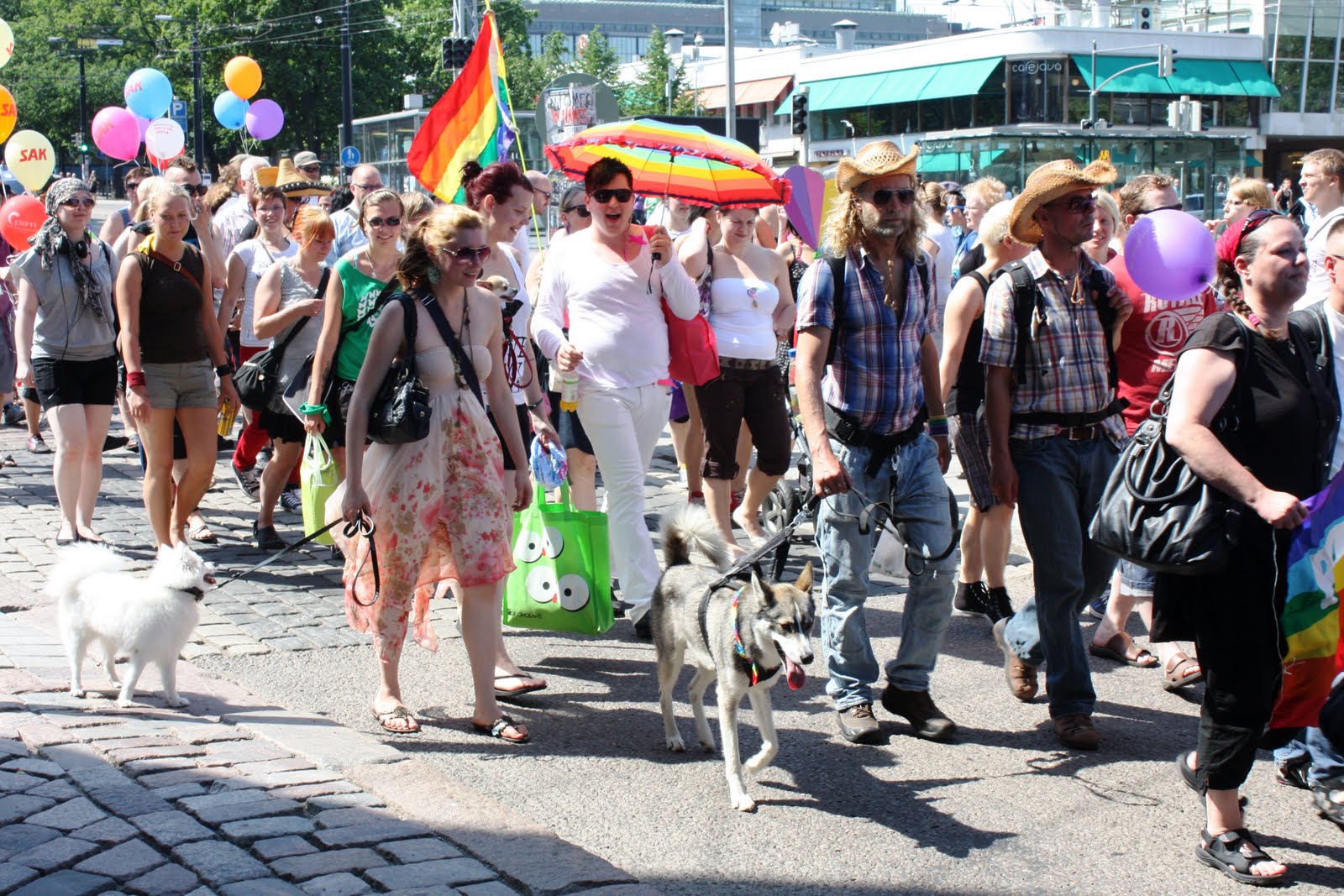
On the first Saturday of July the Helsinki Pride events culminated in a massive parade in support of the gay and lesbian communities. The parade passing through the centre of the city demonstrated great solidarity amongst the population, gay and straight alike. A year ago, there had been an attack on the parade by a gang of young right-wingers who used pepper spray and some other gas on the marchers. The perpetrators, all dressed in black, were soon arrested and dealt with. The huge participation in the parade this year must have been partly due to the actions of these nitwits. One of the key demands associated with Helsinki Pride this year was the call for a gender neutral marriage law. Most Finns would either support such legislation or pay little attention to the matter. However, due to the inclusion of the tiny Christian Democratic Party in the new coalition government, the proposal was dropped from the government’s program.


Another distinction of Helsinki is that it has more live music performances per capita than any other European city. Finland is quite well known internationally for its classical musicians and opera singers, like Karita Mattila whose performances at the New York Metropolitan have delighted opera fans (as well as those who found her nude dance as Salome titillating), as well as orchestra conductors, starting with our most famous composer Jean Sibelius. (My friend Vesa, who maintains the Sibelius website linked herewith, has recently published a massive 1,000-page volume about Finnish conductors for which he received the prestigious Finlandia prize for non-fiction.) But most of the live music takes place in clubs (and during the summer in the parks) where varieties of rock, blues and pop are performed.


Unfortunately, the jazz scene these days leaves much to be desired (a glance at the programs of the summer’s ‘jazz festivals’ in Finland reveals that some of the key performers include stars like Tom Jones, Elton John and Jethro Tull, who hardly are at the forefront of contemporary jazz). The most popular joint is Storyville, which I visited one evening with my friend Erkki. On most evenings, the music on offer in the pleasant basement club can barely be called jazz. At best, it tends to fall into the ‘happy jazz’ category or, if you’re lucky, the blues. Storyville’s attraction seems to be more as a venue where middle-aged women and men on the prowl can find each other and dance until it’s time to go home around 3 am (but then the question is, whose home?). Somehow, more ‘serious’ jazz has had a hard time finding a permanent home in Helsinki in the past few years. Even the local franchise of the legendary New York club, Birdland, went bust and closed its doors after just a year of operation. There is a new club, Koko, which I heard about—that it is good and fills a niche for contemporary jazz—but didn’t have the chance to visit.


On my last morning before returning to New York the following day, I walked to the nearby Töölöntori market place for a cup of coffee. Then I continued on a lengthy walk around the shoreline. Helsinki is built on a peninsula and a large number of islands in the Gulf of Finland, so the sea is never far. The Hietaniemi beach was getting crowded already in the morning. People had spread their towels on the sand or on the rocks and grass a bit further from the sea. Pretty girls in bikinis mixed with families and older folks taking in the sun and frolicking in the waves. Had I had one more day I would have risked sunburn and skin cancer and joined them. But alas, time flies and holidays are never long enough.


The rest of the day was spent with my friend Kari. We met early in the afternoon in the city centre. The day was already hot and the previous night had been quite late, so we decided to sit down, refresh ourselves with a lonkero and plan our route. We ended up walking for kilometers in the midday sunshine, exploring shops where I would purchase things to bring back home—Finnish music, a couple of novels (it is too seldom I read in my native language anymore), food items (such as hard bread, fish preserves, mustard) that may have more childhood nostalgia than actual nutritional value—and stopping at intervals to gather strength on a shady terrace. The long day—and my vacation back in the old country—ended on Kari’s balcony where we sat listening to an eclectic collection of music from our youth—ranging from old favorites (Kate Bush, Boz Scaggs and others) to 1970s Finnish progressive jazz of Eero Koivistoinen—watching the sun go down but never quite set far behind the horizon.

Monday, July 5, 2010

In defence of decency


At midnight I walked back to my hotel through the darkened city park. On this July night, not even the lights here and there could lighten up the quiet and verdant place by the lake, mostly because the lindens and other trees were covered in thick foliage through which the lamplight hardly could penetrate. It was lonesome although I was not alone. There were shapes lurking in the shadows. Mostly lovers embracing each other, but also small groups taking advantage of the balmy summer night. I could see the shapes of wine bottles as they were lifted to thirsty lips. It never crossed my mind that I should be worried that someone might try to rob me (or worse). I was in Geneva, Switzerland, a place known for its safety and decency.

When you talk with people who 'have been around', Geneva, and entire Switzerland for that matter, often come up in discussions as a 'boring' place. Yes, it's beautiful, but so dull and regulated. Pedestrians wait for the light to turn green before they cross the street, even if there's no traffic. And when there is, cars stop politely when you're about to step onto the zebra crossing. It's so neat and clean; a real traveller would need some more grit. The trains leave exactly on time, so if you're even 20 seconds late you've missed it.

Horrible, isn't it? How can a creative and free human being live under such constraints? In New York where I live, every self-respecting person takes pride in not hesitating to exercise their rights enshrined in the Constitution. Pedestrians hover halfway through the street when there's heavy and unruly traffic from all directions, thus making everyone a little less safe and a little less efficient. But waiting would show your meekness and respect for rules that someone else created. Completely unacceptable. It would cramp your style, even if it benefitted the society as a whole. Maybe it's a reaction to the fact that your risk of being run over by a rogue driver is highest when the walk/don't walk sign is green at the same time as that of turning traffic from behind. If one runs through red lights, like half of the people who drive in the city, then everyone is alert and avoids accidents.

And isn't it a sign of fascism that trains run on time? That's what Mussolini made them do in the Italy of the 1930s. It doesn't take into account that individualistic and relaxed people have to have some leeway. Never mind that they make others wait. It's their individual right.

The cleanliness must also be some form of fascism. At least it is very bourgeois and thus reprehensible. A society that is so efficient and organized must surely be repressive to the wild individualism that we're all entitled to. My freedom is sacred, even if it tramples on yours. It is my right to mess up the environment in my pursuit of my happiness.

Friends of mine once moved to Zurich. In their apartment building there was a written house rule that, after 10 pm, men also had to sit down to pee. This was so that they wouldn't disturb the neighbours with the sound of the stream hitting the water. They didn't last long and moved back to Tokyo. But hey, wait a minute, isn't Japan also supposed to be a conformist society of uniformed robots? Well, in fact, no. It's another society that allows for the pursuit of individual interests, however nutty or eccentric they may be (think about obsession with cafés where the waitresses are dolled up as manga characters), as long as they do not infringe on other people's freedoms to pursue their own happiness. Freedom with responsibility, such a new and foreign idea, especially to Americans.

Another such repressive place, of course, is Singapore. A place everyone with any sophistication loves to hate. Chewing gum is frowned upon, not because it's an ugly habit, but because the chewers have a tendency to stick their chewed globs mixed with saliva in places where other people step or, worse, try to hold onto for balance on public transportation. Anyway, public transportation is for losers, of course. Just look at the lowlife who take the 'loser cruiser,' as buses are called in the States. If you have your own car or SUV you don't have to deal with such petty inconveniences. Unless someone messes with your car.

Several years ago, Singapore had the audacity of caning an American youth, Michael Fay, for running amok in the city and spray-painting cars that had the misfortune of having been parked by their owners along his route. This was barbaric (the caning, that is). Even the then-president Bill Clinton interfered and successfully convinced the government of the independent country that an American should not be so inhumanely punished for just innocently expressing his stupidity. Singapore agreed to reduce the number of the lashes from six to just four, but still the poor lad did get spanked for his offence and could not sit for a lengthy while. It must have been so humiliating and painful. A gross violation of human rights! And for what? Just for some youthful indiscretion and fun destroying innocent people's property on which they had spent hard-earned pay. Everyone does that, right? (Somewhat ironically, just this June a Swiss business consultant, Oliver Fricker (32), confessed to spray-painting a Singapore metro-car and may thus be subject to the same fate.)

Singapore, like Switzerland, is such an oppressive place. The only thing one can do is to go drown one's sorrows on Clarke Quay or one of the other clean and lively entertainment areas by the seaside and join the thousands of other merrymakers for a Singapore Sling and some fabulous fried noodles (guaranteed not to make you sick, because the fascist state has set up draconian health controls on the restaurants that restrict the God-given right of the entrepreneur to maximize his profit). Or go to one of the many clubs for some music and dancing with the scantily clad locals (poor things are not even obese).

It seems indisputable from the evidence of places like Switzerland, Japan, Singapore and, yes, my country of origin, Finland, that wealth and its relatively even distribution, high levels of education throughout the population, and a strong government are good for the environment and well-being of the people.

Back to Geneva. It's a small town, that's for sure. But for its size it's not dead. Just this past Tuesday night I was sitting with my friend Azusa in a waterfront bar by Lac Léman. The place was crowded, but not unruly. Plenty of people were having drinks and mingling with others from different national and ethnic backgrounds in the cosmopolitan town. The noise level was such that one could actually have a discussion. All were dressed well. Not fancily or expensively, but in style. Most women looked quite sexy in their summer dresses. Midnight came and the keepers of the establishment rapidly and effectively expelled us. The closing hour specified in their licence had arrived and everyone had to leave, which we all did in an orderly fashion and without protest. Had we wanted to continue, we could easily have gone to any one of the many bars that have a licence to stay open until 2 am or stay in a nightclub until 5 am. We did not feel the urge, nor did we feel particularly deprived by the fact that we were thrown out onto the beautiful lakeside walk at this early hour.

As I wrote this, the weekend was coming and the lakeside was even more crowded than on that particular Tuesday. Some hours ago the sun had set over France. The recognizable silhouette of Mont Blanc behind the gorgeous lake had faded into darkness. The restaurants in the city centre were still teeming with people and there was excitement in the air: after all, this weekend would bring important matches of the football World Cup in South Africa and the Wimbledon finals. When I headed towards the leafy darkness of the park, the sidewalk bars were still selling drinks and hundreds of people were perusing them. Those who couldn't fit into the seating areas were lounging leisurely on the lawn. The establishments served the beers in real glasses, as opposed to plastic. It was a risk, of course, as common sense would dictate that the glasses would be broken on the grass or on the next guy's head. But these domesticated people didn't do that. They just lay there enjoying the balmy evening in harmony with friends and actually returning the empty glasses to the bars.

They must have felt so deprived. After all, they didn't even have concealed handguns on them to protect their freedom and liberty from each other and the government.