Showing posts with label Environment. Show all posts

Monday, March 9, 2026

Why development evaluation must change

Across the world, communities are already living with the consequences of climate change and environmental degradation. Farmers face unpredictable rains. Coastal communities confront rising seas. Forest-dependent peoples see their livelihoods erode as ecosystems decline. In response, development agencies, international financial institutions, NGOs, and others are scaling up efforts that aim — often simultaneously — to reduce poverty, strengthen resilience, protect ecosystems, and contribute to global climate goals.


Yet a persistent challenge remains: how do we know whether these investments are delivering results that last in a world of environmental limits?

Evaluation plays a powerful — if often underestimated — role in answering that question. It shapes what is considered effective, what gets funded and scaled, and what is ultimately abandoned. Yet most evaluations still focus narrowly on short-term social or economic results, paying scant attention to environmental sustainability.

This is no longer sufficient. In an era defined by climate change, biodiversity loss, and resource scarcity, evaluation must move beyond linear models and adopt a systems perspective that recognizes the interdependence of human and natural systems. Evaluation is not just a technical exercise; it helps identify what works, for whom, under what conditions — and whether success today may undermine sustainability tomorrow.

Paradoxically, however, many development evaluations continue to treat the environment as a backdrop rather than a central actor. Projects are assessed primarily for how well they deliver intended social and economic benefits, while environmental effects — positive or negative — are relegated to side notes or omitted altogether. If development interventions are to be sustainable, this must change.

Development does not happen in a vacuum

Two simple premises should guide any evaluation at the environment–development nexus. First, every intervention takes place in a specific social, economic, political, and ecological context that shapes its chances of success. Second, virtually all human activity affects the natural environment, whether intentionally or not. Agriculture, infrastructure, energy, water supply, and even social programs leave environmental footprints.

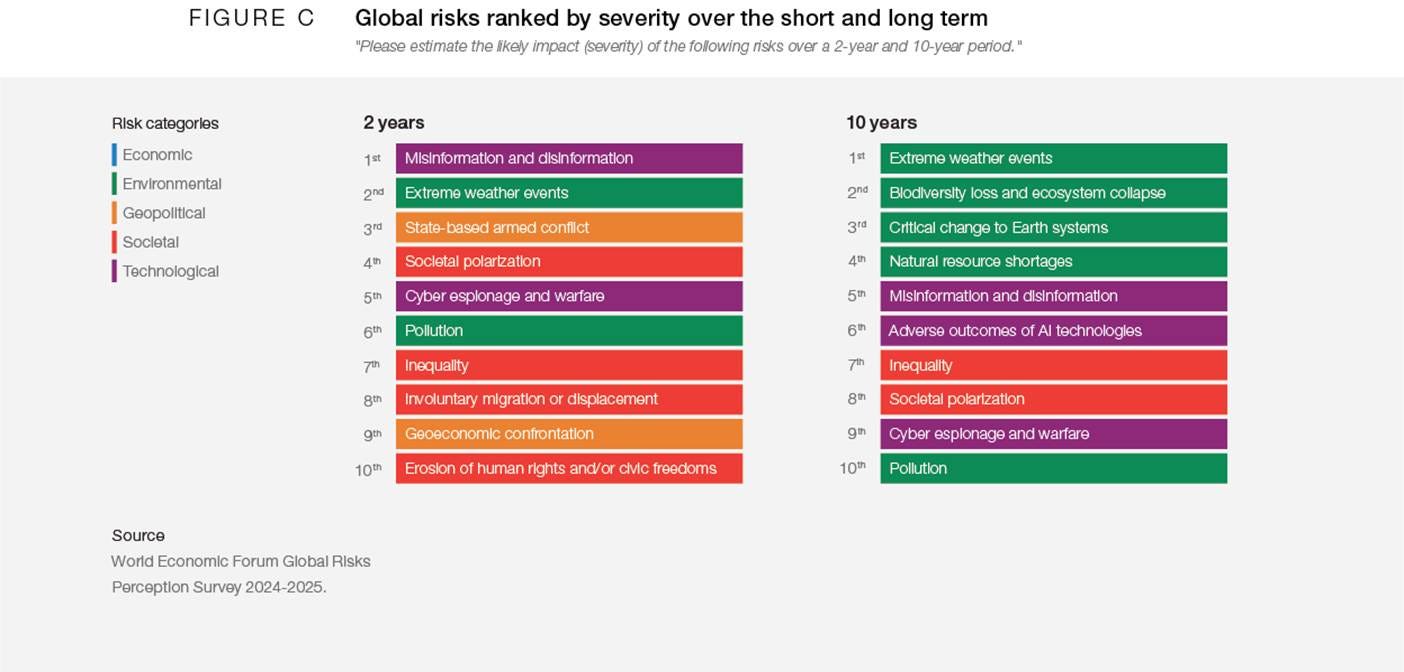
The World Economic Forum’s Global Risks Report 2025 captures a sobering reality: environmental risks now dominate the medium- and long-term outlook. Climate extremes, ecosystem collapse, water stress, and pollution are increasingly shaping humanity’s trajectories. These risks interact with inequality, food insecurity, fragility, and conflict, multiplying their effects and complicating policy responses.
A screenshot of a computer

AI-generated content may be incorrect.

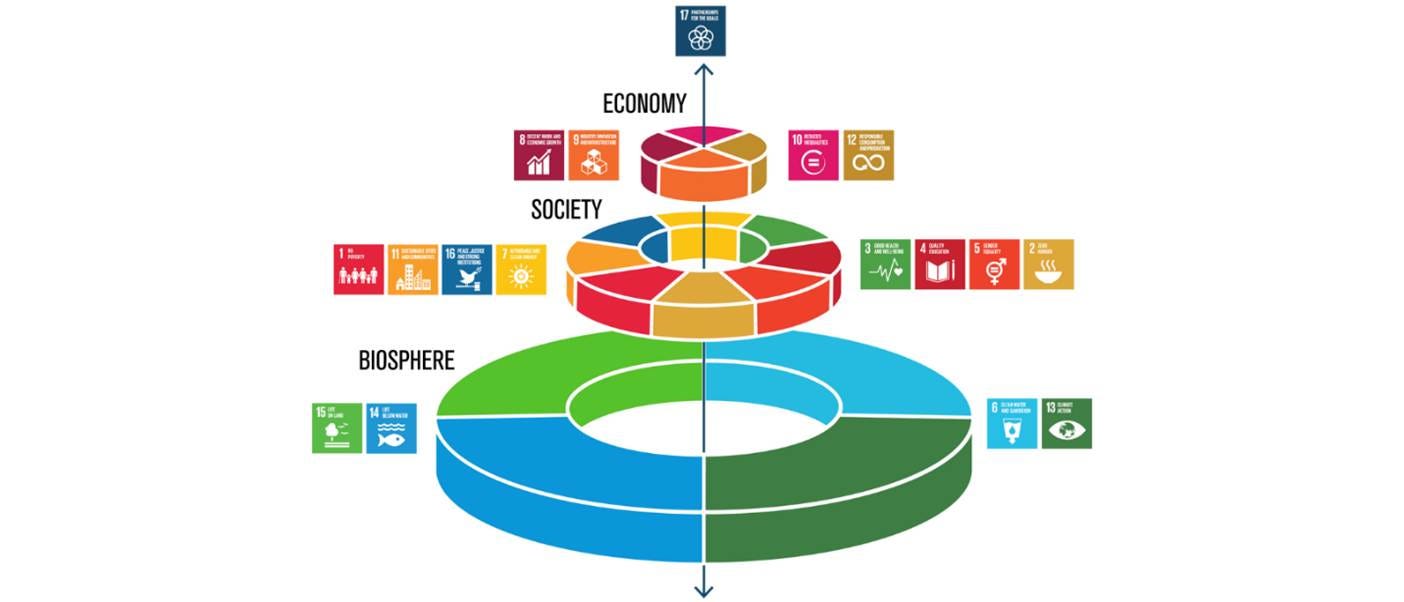
The Sustainable Development Goals (SDGs) explicitly recognize this interdependence. The now-familiar SDG wedding cake offers a useful reminder: the biosphere is the foundation upon which societies and economies rest. Without stable ecosystems, neither poverty reduction nor inclusive growth can be sustained. For policy-makers and evaluators alike, this has a clear implication: assessing development outcomes without assessing environmental sustainability is no longer credible.
A diagram of a pie chart

AI-generated content may be incorrect.

Yet in practice, progress remains fragmented. Social and economic goals often advance at the expense of environmental ones, despite growing evidence that environmental degradation ultimately undermines development gains. As a result, development portfolios may deliver short-term gains while inadvertently increasing long-term vulnerability.

This matters because humanity has already crossed several planetary boundaries — the safe operating space for Earth systems. These include biosphere integrity, biogeochemical flows, novel entities, and climate change. Development interventions that fail to account for these dynamics risk solving one problem while worsening another.

A gap between ambition and practice in evaluation

Despite growing awareness, evaluation practice has struggled to keep pace. Reviews by evaluation networks show growing demand for sustainability-informed evaluations. Both project proponents and intended beneficiaries want evidence that interventions are not only effective today, but durable tomorrow. However, environmental dimensions remain underrepresented in most evaluations.

Two factors stand out as explaining this gap. The first is scope. Many evaluations (and evaluation commissioners) define their evaluand narrowly, focusing on project activities and short-term outcomes while ignoring broader environmental interactions. The second is capacity. Evaluators are usually trained in social science methods but lack confidence or expertise in environmental and ecological analysis.

Traditional project models and evaluation approaches rely on linear theories of change: inputs lead to outputs, which lead to outcomes and impacts. Such models struggle to capture the feedback loops, thresholds, and unintended effects characteristic of complex development contexts.

Seeing development as a coupled human–natural system

To address this gap, evaluation must embrace a systems perspective — often described as coupled human and natural systems (CHANS) or social-ecological systems (SES). This approach recognizes that humans are not separate from nature; we are embedded within it, constantly interacting with ecological processes in dynamic and adaptive ways. It recognizes that development interventions operate within dynamic systems shaped by policies, markets, institutions, and ecological processes.

The intellectual roots of this perspective are perhaps best associated with Elinor Ostrom, Nobel laureate in economics. Ostrom challenged the idea that shared natural resources inevitably lead to overexploitation — the so-called tragedy of the commons. She demonstrated that communities can develop governance arrangements that manage resources sustainably, provided institutions align with ecological realities.

For evaluation, this means examining not only what interventions do, but how they interact with broader systems, and how those systems respond. For evaluation, this insight is profound. It means that social outcomes, economic incentives, governance structures, and environmental processes must be analyzed together. Change in one domain often triggers unintended effects in another, creating feedback loops that can either reinforce or undermine sustainability.

Evaluations that focus narrowly on income generation, yields, or service delivery without examining environmental sustainability provide an incomplete — and potentially misleading — picture of impact. Interventions designed to improve resilience or livelihoods may inadvertently undermine the ecological foundations on which those livelihoods depend. Without a systems lens, evaluations risk missing these contradictions — and thus misjudging both impact and sustainability.

When does the environmental dimension matter most?

While all development interventions have environmental implications, some clearly demand deeper analysis. These include, first, interventions with explicit environmental objectives, such as protecting a natural habitat or reducing chemical pollution. In such cases, assessing the environmental impacts is obviously central.

Second are interventions whose success depends on a healthy environment, even if environmental improvement is not an explicit goal. Nowhere is the need for integrated evaluation clearer than in agriculture and rural development. Agriculture sustains billions of livelihoods, yet it is also a major driver of deforestation, water stress, biodiversity loss, and greenhouse gas emissions. Around three billion people live in areas highly vulnerable to climate change, many of them smallholder farmers, pastoralists, and fishers. Women, Indigenous peoples, and marginalized groups are disproportionately affected. By 2030, drought alone could displace hundreds of millions of people.

At the same time, nature underpins food systems. Healthy soils regulate water and store carbon. Pollinators support the majority of global food crops. Forests and wetlands buffer communities against climate shocks. When these systems are degraded, food security and incomes suffer.

Third are interventions that use or alter natural resources, like land, water or forests, or are implemented near environmentally sensitive areas. Large-scale or long-term projects, in particular, can disrupt established patterns of resource use, wildlife movement, or waste generation, with cascading effects over time.

Finally, any intervention that introduces pollutants — whether chemicals, waste, heat, noise, or biological agents — should assess environmental consequences. Pollution is not limited to toxic substances but includes anything that degrades ecosystems or makes them less hospitable to life qualifies.

Drawing system boundaries — and asking the right questions

A systems-based evaluation begins by situating the intervention within its broader context. This includes policies, markets, institutions, and other programs operating in the same space. Too often, well-intentioned initiatives work at cross-purposes, undermining each other’s effects.

Defining system boundaries is not about including everything; it is about including what matters. Crucially, systems thinking pushes evaluators beyond asking whether activities were implemented as planned. It asks whether the intervention actually made a difference to the problem it set out to address, and whether that difference is likely to last.

What distinguishes systems-focused evaluations is their attention to interactions across space and time. Environmental effects may manifest far from project sites or long after implementation ends. Conversely, external environmental changes — such as climate shocks or land-use change — may shape project outcomes in ways that standard evaluations overlook. Expanding the analytical lens makes unintended effects more visible.

Systems thinking also shifts attention from symptoms to root causes. Environmental degradation is rarely driven by local behavior alone. Economic incentives, agricultural policies, land tenure systems, and market forces all shape how resources are used. Evaluations that ignore these drivers risk overstating the expected results while underestimating the risks to sustainability.

Working across disciplines — and worldviews

Environmental issues cut across sectors and disciplines, from agronomy and ecology to economics, engineering, and public policy. Evaluators therefore need to engage with expertise beyond their own comfort zones. This includes not only scientists, but also Indigenous peoples and local communities, who often possess the most intimate knowledge of local ecosystems and livelihoods.

Bringing these perspectives together is not easy. Different disciplines and stakeholder groups use different languages, value systems, and ways of knowing. Facilitation and translation are therefore as important as technical methods. The goal is not to force consensus, but to build a coherent picture of how the system functions and how the intervention has interacted with it.

Methods fit for complexity

A systems perspective does not prescribe specific methods, but it does influence how methods are chosen. The starting point should always be the evaluation questions, not the evaluator’s toolkit. Methods that are particularly useful for tracing how interventions contribute to change in complex, non-linear systems, offer alternatives to overly linear cause-and-effect models that rarely reflect reality.

Geospatial approaches deserve special mention. Satellite imagery, remote sensing, and spatial analysis can fill critical data gaps, especially in large, remote, or insecure areas. They allow evaluators to track land-use change, deforestation, vegetation cover, and infrastructure and settlement expansion over time, and even reconstructing baselines retrospectively.

However, geospatial data show what changed, not necessarily why. Social, economic, and institutional mechanisms still require qualitative inquiry, fieldwork, and stakeholder engagement. The strongest evaluations combine geospatial evidence with more traditional methods.

Evaluation for a world of limits

Evaluation must evolve if it is to remain credible and useful in a world defined by environmental limits. This does not mean turning every evaluation into an ecological impact assess]ment, nor does it imply adding complexity for its own sake. It means recognizing a basic reality: development outcomes and environmental sustainability are inseparable. Interventions that degrade ecosystems may deliver short-term gains, but they ultimately undermine the resilience and equity they seek to promote. Conversely, efforts to protect nature will not endure unless they also improve human well-being. A systems perspective — one that takes human and natural systems seriously, together — allows evaluation to move from counting outputs to understanding lasting change. In an era of climate risk, biodiversity loss, and constrained resources, this is not simply a methodological choice. It is a responsibility.

[This piece draws on an article by Jeneen R. Garcia and Juha I. Uitto in Evaluation and Program Planning journal in 2025.]

Thursday, December 4, 2025

In the aftermath of COP30 in Brazil: The limits to intergovernmental processes

COP30 in Belém was billed as the moment the world would finally shift from pledges to real climate action. Instead, negotiators left the Amazon with no agreement to phase out fossil fuels and little progress on finance. As the rainforest strained to host yet another global gathering, the world’s political will once again fell short. The thirtieth conference of parties (COP30) of the United Nations Framework Convention on Climate Change ended a week ago in Belém, Brazil. The expectations were high, as they always are, so the outcome felt that much more disappointing. The host country had called this “implementation COP,” implying that it was time to move from talk to action. Instead, most observers think that any earlier progress was actually reversed. Notably, the final conference document makes no mention of phasing out fossil fuels, which after all are the main culprit of global warming. Even in the earlier COPs, held in the United Arab Emirates (UAE) and Azerbaijan, both petrostates that were seen as slowing down or even undermining the efforts to decarbonize the world, the importance of moving away from fossil fuels made it into the final text. With regard to deforestation, while more funding was promised for preventing the decimation of forests, countries failed to agree on a plan to stop the destruction and instead decided to rely on voluntary commitments. The location at the mouth of the Amazon, was symbolic and Brazil had emphasized prevention of deforestation as a central issue to prevent climate change. The Amazon occupies an important place in the minds of environmentalists as a symbol of a pristine forest whose environment and Indigenous Peoples are threatened by logging, agricultural expansion, destruction, and greed. The Amazon has been called the lungs of the world and, while this may be exaggerated, its global role in regulating water and climate and as a repository of biodiversity cannot be denied. The COP saw the presence of a record number of Indigenous peoples – at least 3,000 of them – and Brazil agreed to demarcate 10 new areas reserved for them. Regretfully, the COP itself brought pressures on the Amazon’s fragile ecosystem as thousands of delegates, activists and other hangers on congregated in Belém. There were concerns that the massive event itself would cause at least local environmental harm. For example, some activists expressed concern about the construction of Avenida Liberdade, a four-lane highway built through a protected area close to the city. Even if the avenue is presented as a “sustainable highway” that includes wildlife crossings, solar lighting and bike lanes, there is still a risk of fragmentation of the forest ecosystem, and providing easier access for loggers and poachers. A central player on the global scene, the United States did not even participate, as President Donald Trump withdrew the country from the Paris Agreement, not for the first time. At a speech at the UN in September, Trump called climate change the “greatest con job ever perpetrated in the world.” But the US is not alone. The Europeans continue playing along, but with reduced commitments to actual funding – partly because of the pressures Russia’s aggression in Ukraine has caused for European countries to expand their defense spending. Similarly, many developing countries have reprioritized and reduced their commitments to combating climate change. This is understandable, given that there are still over 3 billion people in the world living in poverty, according to the World Bank, and the developing countries’ contributions to climate change have been marginal compared with the rich countries. Consequently, they call for resource transfers from the global North to the South to adapt to the impacts of climate change and to leapfrog to latest clean technologies. For years now, the traditional Western donors have placed their faith in the private sector, having realized that there is no way that the public in their countries would accept transferring the required amounts of funding to developing countries. They just put in catalytic funding by way of guarantees derisking private sector investment. After all, the private sector is richer than ever. This is called “blended finance.” This approach has so far realized only limited success. The private sector financing has materialized only in a few sectors where there is a clear business case to be made, such as renewable energy (more on that later). The most vulnerable and least developed countries – nearly all of which are in Sub-Saharan Africa – see very little private sector investment in any field, let alone environmental protection. There is an obvious reason for this. The markets are small and institutions are weak. Consequently, investment is risky and the profit potential low. When I worked in the Global Environment Facility, I heard from private sector representatives that, what a public funding organization like the GEF can most usefully do is to create the policy, regulatory and legal frameworks that level the playing field and make investment more secure. The COPs have a history of generating unfulfilled promises. The demands for funding multiply and new funding mechanisms, such as the Loss and Damage Fund, are established with great fanfare but little actual funding. I asked one of the European government delegates why do they always go along with the demands when they know there’s a snowball’s chance in hell to get the required additional funding. Her response was, because otherwise the developing countries will march out of the negotiations. At the end of each COP, there is a communique celebrating the success that was achieved in the final moment. This is theater that creates expectations and gives an illusion of progress. This time around, there wasn’t even much of a pretense of success. How bad is it? The clock is ticking on curbing global warming to the 1.5-2.0 degrees Celsius above pre-industrial levels, as stipulated in the 2015 Paris Agreement. So far, the record doesn’t look promising as greenhouse gas emissions continue to rise. While most countries have committed to moving towards net-zero emissions, the timetables are not at sync with the Paris targets. Still, not everything is bleak, even as the intergovernmental processes falter. While climate proponents have attributed the positive changes that we have seen in recent year to the Paris Agreement, there is little evidence that the policies agreed upon within the COPs would have actually made a concrete difference. Instead, there are other forces at play. Roger Pielke Jr. points out that “business as usual” scenarios used by the Intergovernmental Panel on Climate Change (IPCC) are highly unlikely to materialize – and have been for a long while. So the actual likely future warming is not +4-6oC by the end of the century, as predicted by the most extreme scenarios, but rather perhaps +2.3-2.5oC. This is bad enough but it is a far cry from the worst-case scenarios. Whether this spells catastrophe depends on many factors, including where you live and how well prepared you are. Adaptation to climate change has gained much attention, and increased funding, in past years. Ahead of the Belém COP, Bill Gates angered many climate activists saying that global warming doesn’t mean the end of civilization. He emphasized that we need to adapt and be better prepared. He also noted that development is adaptation. He’s got a good point there. Many places will suffer; but the better prepared we are the less we’ll suffer. And wealthier places are inevitably safer than the poor corners of the world. Some places will become hard to live in, while others may even benefit. Sea levels will rise threatening especially small islands and low-lying coastal countries. Droughts, water shortages and weather anomalies affect most poor countries and people in Sub-Saharan Africa and the Middle East. Just today, Reuters reported on the rising death toll from a strong cyclone that devastated Southeast Asia, attributing the storm to climate change. Storms may intensify due to warmer ocean temperatures. However, the conclusion from IPCC’s 6th Assessment Report on the increasing frequency of storms is less conclusive. Heat waves are already killing more people than any other climatic hazard. Reducing deforestation will be very important, as is protecting coasts. The oceans and forests are the biggest carbon sinks on the planet. If well managed, they have great potential to regulate global climate. Therefore, loss of the Amazon rainforest – apart from its devastating effects on biodiversity and the lives of Indigenous Peoples – would be disastrous. The other piece of good news is that energy transition is on the way. Despite the best efforts of the US administration, the forward march of renewable energy is now unstoppable. The technologies –whether solar, wind or other – are progressing more rapidly than anyone dared to hope, due to improved technologies and sinking prices. Storage technology that has long been a bottleneck is improving by leaps and bounds thanks to new batteries. Already now, a third of global electricity is produced by renewable energy, and it is projected to grow rapidly. This is largely thanks to massive developments in the two most populous countries in the world, China and India. There is no doubt that renewables are the future. The markets guarantee this. A friend from West Virginia told me how former coal miners are now flocking to wind farms, still proud to be producing the much-needed energy to fuel development in their state and far beyond. The global leadership in the environment – as in many other fields – is now assumed by China. In fact, it is being handed over to it on a silver platter as the US voluntarily dismantles its science and technology capacities; the basis of America’s leadership over much of the past century. China is still suffering from terrible pollution and is still building up its fossil fuel production capacity to meet its burgeoning energy demand. At the same time, it is building more renewable energy than any other country in history. In the first five months of this year, China has installed five times more renewable energy generation capacity than California’s entire grid from any source. China is also now the leading manufacturer of electric vehicles. It is true that China has taken the dubious first place as the world’s largest emitter of greenhouse gases. This is due to its rapid development and the unprecedented poverty reduction that the country has achieved since the death of Mao Tse Tung. China is a big country and its emissions per capita are just 60% of Americans’. Similarly, in an historical perspective, China’s total emissions pale in comparison with those of the countries that industrialized earlier, in Europe and North America. We will not be able to thrive in a hothouse world, using up all our natural resources. The inequality, apart from being morally wrong, is neither sustainable nor conducive to social and political stability. I do believe, however, that the transition to a more sustainable development model is inevitable, as argued by Rob D. van den Berg in his book, Evidence for Hope: The Emerging Sustainability Revolution. The transition will also encompass the USA. How fast it takes place is partly determined by the political decisions made. I have argued elsewhere that we can’t only rely on renewable energy and EVs, but should also look at ways of capturing carbon from the atmosphere. It is now inevitable that we will surpass the goals embedded in the Paris Agreement. However, climate change doesn’t have to be the end of the world leading to global chaos, but it will require proactive management and adaptation to its impacts. And it will require reducing inequality, both within societies and between countries and continents. If COP30 proved anything, it is that diplomacy alone won’t save us. Real progress will depend on countries investing in resilience, accelerating the energy transition, and confronting inequality – not waiting for perfect consensus. With rapid advances in clean energy and growing calls for equity, the tools for a safer climate future already exist. It’s up to all of us to work towards this goal.

Sunday, September 28, 2025

The Wild Side of Japan


Beyond the neon skylines, crowded subways, and hi-tech innovations lies another Japan – a wilder world of mountains, forests, and rice paddies that reveal the country’s deep relationship with nature.


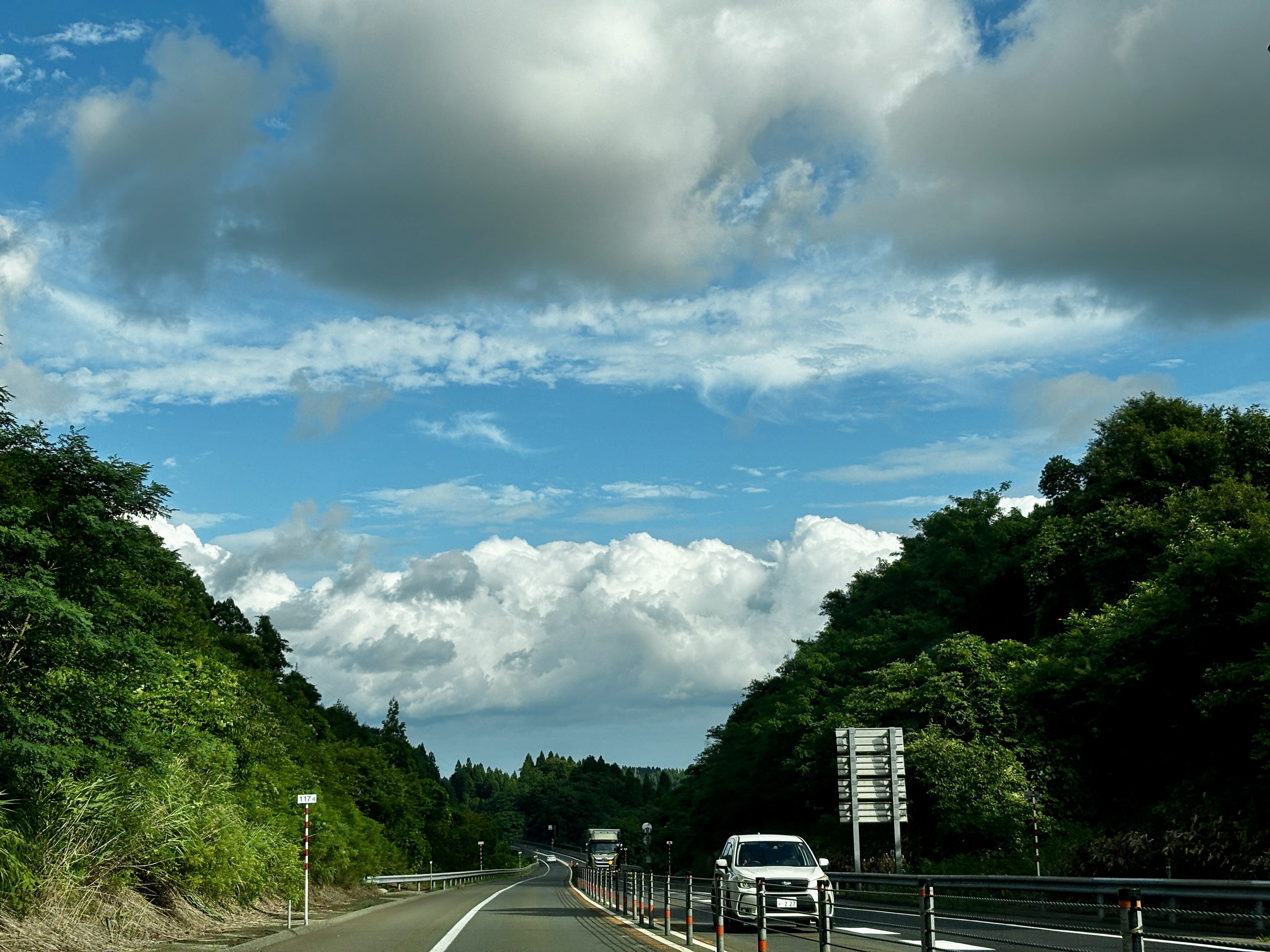
The hills are shaped like traffic cones, except that they’re green. Many of them reach up to over 1,000 meters; the tallest ones nearly 3,000 meters. They stand on both sides of the road – Akita Expressway – blocking any view beyond them except for the sky, which that day was overcast. The forested slopes look virtually impenetrable. There are signs warning of mountain goats, tanuki-raccoon dogs – and bears – along the roadside.

Tohoku, consisting of the northern prefectures on the main island of Honshu, has been called the wild side of Japan. If Japan conjures up images of avant-garde high-rises, hi-tech attractions, and people in dark suits or outrageous anime costumes rushing at subway stations, then you should visit Tohoku. It is another world up here.

We were speeding through the mountains in Kikuchi-san’s Daihatsu Cocoa overtaking many larger vehicles as she pushed the little car to 120 kph. Mami, which is her name, is a hotelier and restaurateur in Iwate and a dear old friend of my wife Yoko. She was taking us from their mutual hometown of Oshu to Akita City in the adjacent prefecture with the same name. The road cut across the north-south mountain range that forms the backbone of Honshu, from Iwate Prefecture in the east to Akita Prefecture in the west, from the Pacific ocean to the Sea of Japan coast. Cutting through the mountains can be taken literally: there are about ten tunnels, most of them short but a few about 2.5 km long. Altogether, one spends more than 10 km driving under the huge mountain masses. What an engineering feat it has been to construct these tunnels!

In between, the road rises to higher ground and occasional bridges cross fertile valleys in the shadow of the steep mountains. These valleys are intensively utilized for farming. Small clusters of farmhouses are surrounded by green rice paddies.

Akita Expressway cuts east to west through the mountains (photo by author).

Rice is the staple in Japan. But it is also more than just food, as the anthropologist Emiko Tierney Ohnuki explains in her book, Rice as Self: “As a metaphor of self, rice paddies are our ancestral land, our village, our region, and ultimately, our land, Japan. They also represent our pristine past before modernity and foreign influences contaminated it” (p. 10). Later she explains, “The notion that each rice grain has a soul and that rice is alive in the hull are fundamental to the meanings assigned to rice in Japanese culture…” (p. 55). The rice paddies prevail even as the countryside empties of people and the farming population ages. This phenomenon also explains the widespread resistance to foreign rice by Japanese consumers, even as rice prices have soared this year and been a major contributor to rising inflation.

Tohoku, with its relatively cold climate, has experienced several rice famines in the recorded history, many of them linked to natural disasters, such as cooling climate after volcanic eruptions. Latest in 1934, the rice crop in Iwate failed due to cold weather, causing many poor farm families to send their children to Tokyo and beyond as laborers, or to work in the water trade, or to join the military, all of which contributed to the pre-war unrest. In better times, Tohoku rice is arguably the best in the world, thanks to the clean environment and water.

Japan’s environmental history is at best checkered. The case of mercury poisoning in Minamata on the southwestern island of Kyushu starting in the late 1950s is perhaps the most famous incident of industrial pollution with dramatic consequences to people’s health. But there were plenty of others where the environment and human health were sacrificed to the altar of progress in post-war Japan, such as the Itai-Itai disease caused by cadmium poisoning discovered in 1967 or the PCB poisoning in and around Kitakyushu the year after. Opposition to industrial pollution was silenced, communities divided, and victims shunned, as the country focused on rebuilding and getting rich at any cost.

Since those years, much has been done to improve the environment. Environmental consciousness is high: practically no one litters, recycling is religiously practiced, and the cities are clean. Air and water pollution are now controlled. The largest urban conglomerations – Tokyo, Yokohama, Osaka, Kobe, Kyoto – are concentrated in the Central and Western Kanto and Kansai areas.

The Japanese culture has been largely based on the desire to control nature. This has its traditional expression in Japanese gardens in which nature has been forced into beautiful, but artificial depictions of, well, idealized nature. The tortured, but gorgeous bonsai trees are another example. For many Japanese, nature is at its most beautiful when it is well regimented.

Another factor playing into the tendency to control nature is the prevalence of natural hazards. Japan consists of a chain of volcanic islands in the middle of the largest ocean of the world, the Pacific. The country is prone to earthquakes that happen daily (although larger ones are of course rarer). Despite its name, the ocean frequently acts in ways anything but pacific, sending typhoons and tsunamis to the coasts. The eruption of the iconic volcano, Mt. Fuji, is long overdue. If a natural hazard exists, Japan is bound to have it in quantities. Consequently, Japan is also the best prepared nation towards natural hazards: even massive earthquakes tend to have relatively few victims.

There are exceptions, the most prominent one in recent history being the earthquake that hit Tohoku on the Pacific side on March 11, 2011. The 9.1 magnitude earthquake and the ensuing tsunami flattened out much of the Sanriku coastal zone in Miyagi and Iwate prefectures and killed almost 20,000 people. The tsunami also caused the meltdown of the Fukushima nuclear power plant resulting in the worst nuclear accident in human history, barring the Chernobyl accident in current-day Ukraine in 1986.

Up in in the mountains between Iwate and Akita, nature is largely unspoiled thanks to a low density of human population, little urbanization and even less industry. That in itself is largely the result of the mountainous topography, the harsh winters, and the relatively short growing season. Yet, virtually all flat valleys are under cultivation.

The topography is also what has saved Japan’s forests. This is one of the most forested countries in the world outside of the tropics, with 67% of land area covered in forests. Japan in the post-World War II years extensively replanted forests, with species like sugi and the Japanese cypress. According to environmental historian Catherine Knight, about 40% of Japan’s forests are currently man-made plantations, not naturally occurring ecosystems.

The forests would most certainly have been decimated had it been easier and more economical to exploit them. Instead, it is said that Japan has outsourced deforestation, especially to Southeast Asia where its companies have long maintained logging operations thereby saving the forests on the home islands.

What is evident even up here in Tohoku is the careful management of natural hazards and nature itself. Mountainsides where roads cross them are protected by engineering works to prevent landslides, which can be caused by earthquakes or just erosion of the slopes.

Japan has been referred to as the “construction state.” The Ministry of Construction and the numerous big and small companies operating in the sector wield significant power. They provide substantial employment and spend remarkable amounts of money as they fix the real and sometimes self-created problems.

In the decades following World War II, most rivers in Japan, notably near urban centers on the Kanto Plain, were straightened and channelized in concrete to control natural flow and meandering. Contrary to expectations, however, these works meant for flood control often had the opposite effect, while also harming ecosystems along the rivers. The government, to a degree, recognized the mistakes and mended its ways, leading the River Bureau of the Ministry of Land, Infrastructure, Transport and Tourism to reverse engineer riverine habitats since the 1990s. Today, Tohoku’s largest river – and to me the dearest – Kitakami-gawa flows quite freely from its origins at Mt. Nanashigure to the Pacific Ocean.

But the time of the construction follies is not over. Following the March 2011 earthquake and tsunami, which destroyed virtually all small fishing ports on the Sanriku coast, many survivors left. Especially younger people moved to Sendai and other cities. Few of the refugees had any intention to return to the coast. Given this and the fact that the tsunami threat will not disappear, to me the sensible thing would have been to develop the coastline to an area for nature and recreation. Instead, the government has invested tremendous amounts of resources to massive earth moving and construction works to raise the coastline, in the process destroying much of the nature literally flattening hills. This for a handful of mostly old people who may return. That just demonstrates the natural tendency of the authorities and the construction industry to find an engineering solution to any problem.

Driving through the central mountains, however, these problems are far away. Yet, just like Sanriku coast, the countryside in the remote sparsely populated areas is further emptying. Most of the young people have moved to cities and the small farmers have few heirs to take over their plots (although there is a small back-to-the-land movement driving some younger urbanites to a more organic lifestyle in the rural areas). One might think that depopulation might lead to rewilding of the land – a popular concept in some parts of Europe – and there may be some benefits to the wildlife. However, the traditional farming system – satoyama – is surprisingly well adapted to the natural ecosystem. The rice paddies themself are ecotopes of their own, with a vibrant fauna and flora. There are studies that suggest that losing this agricultural landscape is a threat to the biodiversity that has evolved in them.

Japan is making measurable progress on climate and environmental fronts and is rolling out a nature-positive economy strategy, which includes the “30 by 30” conservation target, aiming to protect 30% of land and marine regions by 2030. Yet, challenges remain, not least as global temperatures rise affecting climate and weather in this island nation.

Tohoku’s rugged landscapes remind us that Japan’s story is not just one of futuristic glory and control of the environment, but of coexistence with nature, which offers lessons in resilience and balance that Japan, and the world, will need more than ever.