Showing posts with label Flute. Show all posts

Monday, December 9, 2024

Get Me Out of Here, Memoirs by Jeremy Steig


What a fascinating and insightful book! The pioneering flutist and prolific artist, Jeremy Steig, paints an interesting canvas through his own lived experience of how music has evolved since the 1960s. He tells personal stories of many jazz musicians in New York City, often from times when they were not yet well-known (as if jazz musicians would ever be well-known; they are to me, though, which adds to the fascination). But not only jazz: He played with a variety of upcoming stars in the Village, including Jimi Hendrix. Steig was an early pioneer of what was then called jazz rock, later fusion. He also tells personal stories about the music industry, which confirms that the record executives and produces have always treated artists as garbage.

But the book is also so much more. It paints an historical portrait of New York City and particularly Greenwich Village where he was born in 1942 and lived most of his life. He had a colorful family (to say the least). His father, William Steig, a cartoonist, created the character Shrek! His mother was an artist and his aunt was Margaret Mead.

Jeremy tells the story of how things changed and mostly not for the better. The days of safe and friendly streets lined with coffee houses where live music was played were replaced by crack dealers. Little by little most of the lively culture scene died out.

Jeremy Steig was a very important person for me personally. Since I was a teenager and an aspiring flutist, I listened to his records and admired his creativity, and the novel music he made inspired me more than most. From 2004 to 2009 Jeremy played regularly at the Cornelia Street Cafe in West Village. That’s when I finally got to meet him and his wife Asako who is from Japan, like my wife Yoko. The four of us once had a delightful dinner in New York.

In 2010 Asako and Jeremy moved to Yokohama in Japan. Finally, he found peace and happiness. Unfortunately, it would not last long enough. The last chapters in the book, the last ones of which are written by Asako, are bittersweet. I have to confess to shedding some tears when I read them.

Thursday, January 5, 2017

Adios Gato & Jeremy


The year that just ended can hardly be described as a good one. The carnage of the civil war in Syria
and the siege of Aleppo are on top of our minds – or at least should be. The situation in places like Iraq, Afghanistan and Yemen remains precarious. Natural disasters caused an estimated US$175 billion in damages around the world, with floods in China, hurricanes and typhoons in the Philippines and Haiti, earthquakes in Japan, and many others. Terrorists attacked Nice, Berlin and Istanbul (right on New Year’s Eve!) – not to mention Baghdad. The influx of refugees hardened attitudes towards foreigners in Europe and voters in the U.K. opted for BREXIT. Russia continues to flex its muscles – as concretely personified by its often shirtless leader – flaunting human rights, threatening its neighbors and even influencing the US elections through hacking. And partly as a result, the worst disaster of the year, the election of Donald Trump as President of the United States supported by millions of misguided and misinformed people in this post-fact world.

The rock music world experienced many notable losses, as well, starting with David Bowie who died on January 10 at age 69, ending with George Michael passing away on Christmas Day at just 53. In between, Prince’s death on April 21st (at 57) probably received the highest attention, as did that of Leonard Cohen (November 7th at 82). Other notable departures from the popular music scene included the pianist Leon Russell (November 13th at 74) whose sound was more influential than many listeners realized; another highly influential behind-the-scenes force, Rod Temperton (October 5th at 66); the laid back southern pianist/singer Mose Allison (November 15th at 89); and Greg Lake (December 7th at 69), the fabulous bassist, vocalist and composer of King Crimson and Emerson, Lake and Palmer fame. Others, such as the Belgian-born harmonica master, Jean ‘Toots’ Thielemans (August 22nd at the tender age of 94) whose music everyone has heard, whether they realize it or not; the magical Brazilian percussionist Nana Vasconcelos (March 9th at 71), and the legendary drummer Alphonse Mouzon (also on Christmas Day at 68) were great losses to the musical world. Finland lost one of its more prominent jazz musicians, bassist Make Lievonen (December 14th at 69). Although I grieve for all of these fabulous artists, I will here briefly focus on two forceful creators who were amongst the most important to me personally: Gato Barbieri and Jeremy Steig.

The saxophonist Leandro ‘Gato’ Barbieri (b. November 28th, 1932, in Rosario, Argentina; d. April 2nd, 2016, in New York) was my hero during my teenage years. I remember the first album I heard from him, ‘El Pampero’ (1971). It completely blew my mind. It still holds a central place in my record shelf. This was a live recording. The tunes were long – just two to a side – with nearly constant soloing by Gato against a South American beat provided by three percussionists, Bernard Purdie, Sonny Morgan and the above mentioned Nana Vasconcelos. The band was completed by electric bassist Chuck Rainey and Lonnie Liston Smith whose piano added freer fills into the mix. I was sold. Especially, the tune ‘Mi Buenos Aires Querido’ with the gorgeous saxophone intro caught my heart and made me long for the sensuous capital of tango on Rio de la Plata. Gato in his trademark black fedora hat was the coolest cat I knew (apologies for the pun). Even my mother warmed up to his warm, huge and highly distinguishable sound on the tenor sax.

I immediately went back to look for his earlier recordings to find that they were mostly free jazz, inspired by Ornette Coleman. In the mid-1960s Gato divided his time between Rome and New York performing and recording with Don Cherry, Carla Bley and others in the avant garde movement. Only with the 1969 album ‘The Third World’ did he find the voice that would combine elements from Coltranesque jazz with tunes and rhythms from South America. Other recordings followed, including ‘Bolivia’ (1973), which brought forth the lyrical side of Gato, with melodies borrowed from the South American jungles and pampas. Mind you, this was not what you would normally call ‘Latin jazz’, because Gato’s music never flirted much with salsa or even bossa nova. His roots were more firmly in the music of his native country, Argentina.

This was most clearly demonstrated by the film score Gato made for Bernardo Bertolucci’s scandalous ‘Last Tango in Paris’ (1972) for which the composer won a Grammy. The dramatic and sexy score became an international hit record with Gato’s powerful tenor at the lead accompanied by a tango orchestra featuring a bandoneon and strings. Its melancholy laments of forbidden, fleeting love pulled my heartstrings more than most other music ever. The legend has it that Bertolucci had planned a role for Gato in the film but the latter turned out to be such a wooden actor that the plan was scrapped. Nevertheless, when he made a cameo appearance as a stranger practicing the saxophone, whom the lovers, the middle aged Marlon Brando and 19-year old Maria Schneider, could see through a window, I was I heaven.

"Always in the tango is tragedy — she leaves him, she kills him. It's like an opera but it's called tango … The lyrics and the melodies are very beautiful. It's very sensual," Barbieri is quoted as having said in 1997 (Billboard, April 2, 2016).
Then followed in rapid succession the series of Chapter albums recorded for Impulse!: ‘Chapter One: Latin America’, ‘Chapter Two: Hasta Siempre’ and ‘Chaper Three: Viva Emiliano Zapata!’ (1973-1974). The third introduced a large orchestra arranged and conducted by Chico O’Farrill, and some truly beautiful music, such as a version of the classic ballad ‘Cuando vuelva a tu lado’. A fourth in the series, ‘Chapter Four: Alive in New York’, released in 1975, was as the title suggests a concert recording.

Not all Barbieri records were masterpieces. Having earlier recorded for the jazz labels Flying Dutchman and Impulse!, his new label, A&M took Gato to a more commercial smooth jazz direction. I could still find great merit in records like ‘Caliente!’ (1976), even if I missed the earlier rougher productions. The intensity, lyricism and warmth never disappeared from Gato’s playing. His collaboration with Carlos Santana on a rendition of the latter’s composition ‘Europa’ can still bring tears to my eyes.

There was a long hiatus in his recording after a dispute with the record label in 1982. During the 1980s he released a couple of albums that received little attention. Throughout the period he toured extensively performing around the world. His wife of 35 years, Michelle, died in 1995, and he himself went through the first of his bypass heart operations. His comeback album after the break was the 1997 ‘Qué pasa.’ By that time, Gato had married again, to Laura, with whom he would spend the remaining two decades of his life. During the 2000s he would only release a couple of albums, but he continued to perform in concerts. I last saw him at the Blues Alley club in Washington, DC, more than a decade ago. He was in great form performing the music that he loved, not the smooth jazz version of it.

"Music was a mystery to Gato, and each time he played was a new experience for him, and he wanted it to be that way for his audience,” Laura Barbieri is quoted as saying (Rolling Stone, April 3, 2016). In 2015, Gato Barbieri received a lifetime achievement Grammy Award from the Latin Recording Academy. He is greatly missed but the consolation may be that there is no better way to remember him than through his sensuous, melancholy music.

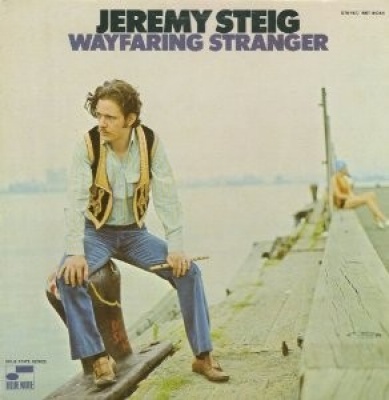
Another artist and human who made a huge impression on me was Jeremy Steig (b. September 23, 1942, in Manhattan; d. April 13, 2016, in Yokohama). I also started listening to him as a schoolboy in Finland in the 1970s. I often biked over to my friend Timo’s house on afternoons to listen to music. We’d have a wide scale, ranging from Edgard Varèse to Eric Dolphy to Frank Zappa, as long as it was novel and interesting. Timo was the one who introduced me to the records of Jeremy Steig and the music hit me like a rock from the very beginning. Both Timo and I were aspiring flute players, so discovering a rare jazz flautist who was as versatile and creative as Steig was a real treat for us. At that time, almost all jazz flutists were primarily saxophonists who doubled on the smaller instrument, but Jeremy Steig was a flutist first. The first record I remember hearing was ‘Wayfaring Stranger’ (1971), which featured a small group of leading contemporary jazz musicians, such as Eddie Gomez and Don Alias, but playing to a funky rock beat. The music was free in a loose format with largely improvised interplay. Again, I went back to older albums by Steig, such as the 1968 ‘Jeremy & The Satyrs’ which embodied the psychedelic spirit of the era.

Jeremy Steig had grown up in the straight jazz tradition and had been on the New York scene since the early-1960s. He released his first album as a leader, ‘Flute Fever’, in 1963. The album featured a traditional piano trio with young Denny Zeitlin. His greatest claim to fame in mainstream modern jazz was, however, ‘What’s New’ recorded with the pianist Bill Evans, backed by Eddie Gomez and Marty Morell, in 1969. The song list consists of standards, such as ‘Straight No Chaser’, ‘Lover Man’ and ‘Autumn Leaves’ but the treatment was novel and the playing enormously creative and interactive. Jeremy later told me how in those days, there were no fancy music schools for jazz musicians to take a shortcut to fame; the only way was just to practice and play and try to get the chance to be accepted to sit in with the established stars in clubs. To me, one of the best collaborations was the rather free form album ‘Outlaws’, recorded in 1976, with just Eddie Gomez on bass and Jeremy Steig on flute and alto flute.

Jeremy Steig’s flute playing was truly unique. He had perfected his jazz chops but then moved more towards a crossover style, adopting techniques that incorporated singing into the flute and ample use of overtones. What contributed to his special sound was a motorbike accident at 19 that left a side of his face paralyzed. He re-learned to play and rebuilt his face muscles, but never fully recovered from the damage. In the 1960s Jeremy would sit in with both jazz and rock groups at live performances in New York’s Greenwich Village. He observed that he could still solo “with integrity” over the funky beats of rock bands. “We decided that we’d invented jazz-rock … Of course, there were about 50 other people who had come to the same conclusion,” he later mused (New York Times, June 2, 2016).
It was in Greenwich Village where I caught Jeremy Steig on one of his rare live appearances in 2007 (see my review of the gig). The gig was amazing, with Jeremy playing as innovative music as ever, alternating between the regular and alto and bass flutes (one of his last records – the 2007 ‘Pterodactyl’ – consisted of only overdubs with flutes of different sizes from piccolo to bass). After the show I went to talk with him and his wife Asako who was acting as his manager. We established a good rapport and followed up with a dinner in a nice restaurant in the Village on another evening not long after. A common element was found in the fact that we both had spent a lot of time in Japan. As it happens, Asako hails from Morioka, not far from my wife’s hometown in the same northern Japanese prefecture, Iwate. Asako and Jeremy established a home in Yokohama, which is where Jeremy passed away.
Over the long dinner we discussed many matters, around and beyond music. Jeremy considered himself retired, “senior citizen”, as he repeatedly mentioned. He hadn’t made new records since the above mentioned ‘Pterodactyl’ and the excellent 2007 quartet recording ‘Flute on the Edge’, both produced and released on his own label. He seldom performed but he continued to paint, which had long been his other artistic passion. In fact, he produced the cover art for several of his albums and lately he and Asako created a series of ‘digital picture books’ with his art. Jeremy’s interests were wide and included politics. I remember him raving about the book, Confessions of an Economic Hit Man by John Perkins, which detailed how American firms had taken over developing countries by convincing them to take huge loans for construction and infrastructure projects.

Sadly, Jeremy Steig never became a household name, even amongst jazz aficionados. Still his music was highly influential in many respects. He made appearances as sideman on recordings by famous artists ranging from Art Farmer and Urbie Green to Johnny Winter and Tommy Bolin. One of my favorites is his performance on a rather obscure, but lovely pop tune, ‘Hurricane’ by Dee Carstensen. As Jeremy would tell, the most money he ever made through his music was in 1994 when the Beastie Boys sampled his 1970 ‘Howlin’ for Judy’ for their hit ‘Sure Shot’.

Saturday, September 1, 2012

Japanese Spirit and Music


The performance on the Sunday night, August 26, was entitled 'Japanese Spirit and Music - Voice, Shakuhachi and Shinobue.' The concert featured two Japanese music duos (with additions). It was held at the Michiko Rehearsal Studio close to New York’s Times Square. A somewhat unusual place, but very functional for the purpose, once one managed to get there through the tourist crowds on Times Square.

The first pairing was Nobuko Miyazaki and Emi Inaba. The set started with a solo shinobue, a Japanese transverse bamboo flute, by Miyazaki. She was soon joined by Inaba, a proficient pianist and composer, for a set of tunes that had all been composed by one these young ladies. The first one, on which Miyazaki played the Western flute, left me wondering whether this would be a concert of romantic but somewhat meaningless semi-classical pieces played by two good musicians. I was proven wrong, luckily, as the pace changed rather quickly afterwards. The next piece, Echo, an Inaba composition, was already quite different and quite fun! It immediately demonstrated Inaba’s compositional talents.

The following piece was hers, too, Traveller. The musicians explained how they had met nine years ago in London where Inaba had been a student of composition; how she had wanted to write a piece to play with her friend: and how she had asked about the shinobue and its scales in order to know how to write for the unusual instrument. In fact, playing shinobue or any other traditional bamboo flute with a piano with its fixed tuning is a challenge to the flutist This turned out to be one of the highlights of the performance, a tune with a beautiful theme, followed by changing dynamic and rhythmic patterns. The pianist played some complex yet attractive patterns involving both hands, first in octaves, then in harmonies, which the flute followed. The piece, as the one that followed it, was an enchanting mix of Japanese and jazz sensibilities. Despite these clear jazz influences, all of the music appeared written through with no improvisational elements.

A solo piano piece confirmed Inaba’s skills both as a pianist and, primarily, as a composer. Again, the tune moved dynamically between a sweet and harmonious beginning and an innovative and strong middle before returning to the original melody.

On March 11, 2011, Japan was struck by a tsunami that destroyed a stunning amount of the coastline and killed some 15,000 people. Nobuko Miyazaki told the audience how she had visited the devastated area in Iwate just a couple of weeks ago. She had then composed the tune that was played next as a prayer dedicated to those who perished in the disaster. It was a beautiful piece played on the shinobue, with some powerful inputs from the pianist. The set ended with another jazzy piece by Emi Inaba.  All in all, a nice performance, which was hard to pigeonhole: just two clearly very talented musicians trying to balance their act between Western and Japanese music.

None of this ambiguity was present when Emme and Akihiko Obama performed. In fact, Obama started their part of the event with a classical Japanese shakuhachi solo piece, Daha. He played it with a jinashi shakuhachi, a longer version of the classic Japanese bamboo flute with a deep sound. He switched to a shorter flute when Emme joined him (he would use five different flutes of varying lengths throughout the performance, so I won’t get into that anymore). This was an innovative version of a minyoo, a Japanese folk song arranged for just voice and shakuhachi. After the first song together, the couple proceeded to play Edo no komoriuta, a beautiful lullaby from Old Edo before it became Tokyo. The version—again just by voice and the bamboo flute—contained some amazing interplay between the musicians. It takes some out-of-the-box thinking when in the arrangements for a voice-shakuhachi duet the rhythm would be provided by the singer!

The next piece, Splendour of Sound, was honestly cooking, with Emme adding some African colour and rhythm with a thumb piano. Obama provided some inventive lines while Emme got into singing in the complex traditional nagauta style.

In Aoi Tsubame, Shu Odamura joined in with a guitar. He had to wait for a lengthy moment while Emme sang the theme unaccompanied by any other instrument—she is just fantastic, her confidence based on the absolute command of her voice and the genre—before he was able to join in. He started with an atmospheric solo, followed by a sequence in which he and Emme interplayed in an almost bossa nova –like style.

The piece led seamlessly into another one, starting with a guitar-shakuhachi duet with interesting improvisational exchanges. Suddenly, Emme joined and inserted some very potent vocals into the slowly building music. This piece contained some of the most intensive playing of the evening, with a searing shakuhachi solo by Obama.


At the end, all of the musicians present got together for a fun Japanese tune, Zakiyaki, which Emme instructed the audience to participate in (which we did by clapping our hands and joining in the catchy refrain). This was a very engaging and fun moment, with Miyazaki and Inaba joining the rest of the musicians on stage. In fact, the bamboo flute improvisations by Akihito Obama and Nobuko Miyazaki, on shakuhachi and shinobue, respectively, were most enjoyable!

To calm the scene down before we all had to go home, Emme and Obama performed one more tune. This once again brought the solo human and bamboo voices together, the couple singing  and playing with and without each other, both showing more artistry and skill than reasonable for an average musician. The beauty and peace of the Japanese music lingered with me as I stepped out to fight the crowds in the neon lit hell of Times Square.


Just a few days later, on August 30, Yoko and I went to listen to Obama once again, yet in a different setting. This time he performed in Ran Tea House, just blocks away from where we live in Williamsburg, Brooklyn. Obama’s performance tonight was part of a series of cultural talks with Asian related artists from different fields, called uNtitleDdialogue initiated by Echo He and Jessie Yang from New York University. This was the shakuhachi player’s last engagement in New York as part of his six-month Asian Cultural Council fellowship that had brought him here to research the intersection between traditional Japanese shakuhachi music and the American improvisational jazz-inspired music.

This concert consisted entirely of traditional solo shakuhachi music, with six numbers of mostly classic honkyoku style. Most of the tunes, such as Honshirabe and Shika-no-Tone, are meditational, the shakuhachi not only playing a tune in flute style; an important part of the music consists of the sounds and atmosphere created by a variety of blowing techniques.  Obama also played Kumoi-jishi, a traditional but not meditational piece in koten style, which the Buddhist monks had made just for fun, and Ko-Myo, a goeika Buddhist hymn.

The performance was followed by a brief lecture by Obama of the history of the shakuhachi, with demonstrations of the various techniques and different types of flutes that he had brought with him. This was clearly interesting to the crowd of more than fifty people, mostly of Chinese origin (my Swedish buddy Björn and I were amongst the handful of Westerners present). Shakuhachi, as so much of Japanese culture was introduced to the islands from China as early as the 6th century. Since then, the music developed in a uniquely Japanese style, while it slowly disappeared from the mainland.

Yoko, Emme and me
Obama, Yoko and me
The evening ended in an informal manner celebrating Akihito Obama’s completion of the stay in the US and his forthcoming 2nd of September birthday. While Emme brought out the cake, Obama jammed with a ukulele and guitar player demonstrating in practice the fertile middle ground between traditional shakuhachi music and contemporary jazz.


Saturday, August 4, 2012

Elsa Nilsson @ Somethin' Jazz, 31 July 2012


Elsa Nilsson performed in front of a small but attentive audience. The venue was Somethin’ Jazz, the younger sister of the club with the same name in Tokyo’s Ikebukuro district, now celebrating its second anniversary on the 52nd Street in New York. Elsa had brought with her a band consisting of Renato Diz on piano, Yuka Tadano on bass and Cody Rahn on drums.

The repertoire over the two generous sets consisted of a mix of originals and arrangements of folk melodies from Elsa’s home country of Sweden. The young flutist from Göteborg arrived in New York a year ago via Seattle. It was clear that this was her gig and she was in charge of the music, despite her modest manners. The sound of the band was consistent and very pleasant, erring on the side of smooth contemporary jazz with no major surprises or dramatics. As often tends to be the case with flute-led bands, there were some Latin flavors blended into the mix.

The first set started with an original, which Elsa played on an alto flute with an almost vibratofree tone. The band’s sound initially reminded me of some of the classic Scandinavian quartets on ECM records (think Arild Andersen or Lars Jansson), with a crisp piano, string bass and drumming that accompanies the music instead of just providing the beat. The tune, which started as a ballad and moved between minor and major keys, also had a number of rhythmic changes that made it interesting. Yuka Tadano played her first solo of the night with a thick clean tone. The second piece, Extra Shock, also an original, was somewhat livelier with a brisker tempo.

The band fit perfectly into the medium-sized space with near-perfect acoustics, at least for this kind of music, allowing each of the instruments to be heard clearly. Unfortunately, there were only ten people in the audience (three of whom were Elsa’s own support troops) occupying about a third of the tables. Perhaps this is understandable, given that it was a Tuesday night and the performers were not yet widely known.

The rest of the first set comprised a series of three Swedish tunes, starting with a folk song from the Dalarna region, Kristallen den fina, arranged in 7/4. There were some fine moments in the tune with a low bass vamp against the drumbeat while Diz plucked on the piano strings and the flute provided some atmospheric effects. Elsa’s solo was slightly stiff tending towards somewhat square on-the-beat phrasing. She clearly found her groove in the next tune, Allt under himmelens fäste, which was performed with a vaguely Latin beat. The piano started with nicely dissonant tones and evolved into a solo reminiscent of McCoy Tyner. Tadano played an inspired bass solo. The problem with the piece was that about midway the there was a noticeable acceleration in the tempo.

The next piece was probably my favorite throughout the entire evening. Gläns over sjö och strand sounded like another folk song, but when I chatted with Elsa during the intermission she revealed it was actually a Christmas song written in the 1970s. Elsa’s mother had observed that Swedish Christmas songs all sound like they were funeral marches; hence, this arrangement had Rahn playing a funeral march tremolo on the snare, à la Saint James Infirmary, which perfectly fit the slow beautiful melody played in the low register of the alto flute. Elsa added some Arabic scales for flavor, which also seemed to go well with the melancholy Nordic mood. While the slow march was is proceeding towards its destination, Yuka Tadano picked up a walking bass line, still in 3/4, which led to a gradual build-up of collective improvisation after good alto flute and bass solos, before the serene melody resumed.
The final piece of the first set was a straight funk unabashedly in Herbie Mann style. Most enjoyable, I must say, with fun solos by Renato Diz and Elsa. Unfortunately, again, as Rahn started his solo the tempo accelerated so rapidly that I initially thought it was an intentional devise. After the drum solo, the band caught up and the tune ended with a solid steady beat.

During the intermission, Elsa was chatting with her friends and with some customers, while the rest of the band sat at one of the front tables. The thin Yuka Tadano dressed in a summer dress grabbed a large glass of beer. All the while the owner, or chairman, of Somethin’ Jazz, Satoru Steve Kobayashi worked the tables serving drinks and snacks to the patrons and charging those who were leaving (I heard one of the single men who had had a couple of drinks at a tall table complain that he had not been aware of the music charge. Somethin’ Jazz doesn’t have live music every night, so people apparently stop by in the pleasant 3rd floor bar just for drinks after work.). The bald-headed Kobayashi is also the man behind the original Somethin’ Jazz in Tokyo and is a well-known jazz character in Japan.

Sipping my Pinot Grigio, I was thinking about how some bands and musicians have left an indelible mark on the way jazz is played today. The classic Coltrane Quartet is an obvious example and its influences were evident tonight too, not least in the playing of Renato Diz. I could not help but discover nuances from the original Return to Forever, prior to its electronic fusion reincarnation, and Joe Farrell’s flute in some of the music tonight. So light and effortlessly moving it was.

The second set began with Arabic influences in an original in which Rahn accompanied the flute by drumming with his hands. The second tune started with a solo flute and then moved effortlessly into a medium rhumba, a nice transition for a Swedish folk tune. Elsa’s flute tone was getting thicker presumably as she was now more comfortable with the setting. The third tune, Buckwheat and Banana Bread (at least that’s how I heard her call it), was the set’s most modernist piece, with the flute and piano providing the most ‘off’ solos of the evening. It was moderately ambitious and good as such, but in some ways the least pleasing, perhaps because it came in between the generally rather harmonious concert, as demonstrated by what followed: a beautiful slow waltz in which all players shone. Elsa played a beautiful solo, as did Tadano on her bass. Rahn was at his most sensitive reacting to the whims of the soloists, playing slow triplets in tune with the piano.

The final tune was another Swedish number, Uti vår hage, turned into a Latin celebration. Renato Diz played was at his best, playing a full-fledged salsa piano solo that drove the small audience into wild applause. It was a superb ending to the good concert.

Saturday, June 16, 2012

Zinc Bar, June 13, 2012


 Although I’d never heard the band before, I can safely say that the music they played was very close to my heart. In fact, few people had heard the band before. Like Kaoru Watanabe, the flutist, said in between the tunes, they’ve been playing together for about two years but each of the four musicians is so busy with their different projects that they have actually only performed about five times. And the band doesn’t even have a name. Consequently, Chris Dingman, the vibraphonist under whose name the act was advertised, invited the audience to help by coming up with good name suggestions.

The performance in no way revealed any ad-hocism or lack of practice. On the contrary, the music was finely arranged, while improvisational, and the four musicians played together tightly. The six pieces that made up the 75-minute set were all composed by the band members. The music was like made for the informal atmosphere of Zinc Bar, the intimate club in Greenwich Village. And the crowd was just right, as Yoko observed: all of the small tables were full and there were people in the bar behind the music room, but everyone had a seat and nobody was forced to stand. The audience was also quite varied in background and age.

All of the four musicians have significant credits to their name. Chris Dingman is perhaps the most established of them, at least in the jazz circles, having lent his vibraphone talent to performances by many of the greats of contemporary jazz and recorded with the likes of Anthony Braxton. He is a graduate of the Thelonius Monk Institute. Kaoru Watanabe, whom we know personally because he used to play traditional Japanese music with Yoko, comes from a different background. He used to be a long-time member and artistic director of the taiko-drumming group Kodo. In fact, Kaoru still is heavily involved in the genre and has established his own taiko center in New York. However, he is a very versatile flutist with advanced improvisational skills. Matt Kilmer, the percussionist, has performed and recorded with artists as Simon Shaheen and Krishna Das, while Tim Keiper’s collaborations as a drummer include personalities like Cyro Baptista, Vieux Farka Toure and John Zorn. Tonight he focused on playing kamale ngoni, a kora-like bow-harp emanating from West Africa (he had brought two instruments, of different sizes and, thus, of different tunings). All of these influences—from Asia, Africa, jazz and elsewhere—blended into a wonderful musical mix that was both lyrical and rhythmically enticing.

The show started with an African influenced tune written by Tim Keiper, the primary custodian of the West African sound of the band. The tune kicked off by Matt Kilmer laying out a beat on hand drums joined by Tim tapping on the gourd that formed the base of his kamale ngoni. After a while, Dingham and Watanabe joined in and the mood intensified. By this time Keiper had switched to strumming the kamale ngoni strings with both hands. Although Kaoru played a fine lead on the bamboo flute, fue, the band was yet to find its balance. The polyrhythms laid out by Kilmer were complex—in fact so much so, that I initially suspected there was a supplementing tape, but later realized that he was actually able to create the multiple beats and different sounds just by using his ten fingers as well as his feet—and the entirety of the band was not immediately at ease with the rhythm. Picking the bass string with his thumbs, Keiper was a couple of times slightly behind the beat, resulting in a halt in the music.

The second tune, ‘Iceland’ by Matt Kilmer, took the music to a different direction. The vibraphone provided a lovely somewhat ethereal harmony upon which Kaoru played beautifully on a Western silver flute. The third piece was his composition, ‘Together Alone,’ dedicated to his wife Mari sitting in the audience. To her embarrassment, Kaoru explained that as a working musician he is constantly on the road and when he leaves home the wife sometimes tells him it’ll not be worth coming back. But the piece was about being together even when apart. For the song, Kaoru picked the longest of his three fue with the deepest sound. The introduction bore distinct Middle Eastern harmonies. The tune ended with the men chanting a repetitious phrase until fade-out.

The next piece started with free improvisation by Kaoru using the glissando headjoint on his flute. This invention was created by Robert Dick, according to some the best flutist alive and Kaoru’s former teacher, to imitate the whammy bar on the guitar. The sliding flute was backed by Tim clanging on an assortment of bells and caps spread on the stage floor, even hanging some shakers from his mouth. The piece moved on to a moderate tempo on which Kaoru played a haunting flute solo.

The dexterity of Matt Kilmer was fully on display in a lengthy solo that followed. It was one of the moments that most captured the enthusiastic audience. It was quite amazing to hear the variety of sounds that Kilmer was able to tease out of the single hand drum by using all his fingers and the entire surface of the drumhead at no moment losing the energetic beat.

This was followed by another tune by Tim Keiper, ‘Greed.’ It was an intense piece with superb solos by Kaoru on fue (the clarity of the tone and the clean tuning Kaoru is able to create with the bamboo flute never fails to amaze me) and Chris on the vibes. The author of the piece did not solo, per se, as he generally didn’t during the entire evening, but the kamale nguni again provided an essential element that combined the functions of chord and bass instruments. The composition was complex yet naturally flowing, with the band playing an impressive double-tempo pattern in unison ending each of the solos.

The final number of the evening was composed by Chris Dingman. He explained how the melody had come to him originally already some three years ago, but at that time he had discarded it. But it kept of coming back to him and, luckily for us, he had finally decided to develop it into a full piece (still with no title, however). It was one of the loveliest pieces of the overall excellent set. The composer started with a calm ostinato played on the vibes to which fue and percussion effects added color. The beginning evolved into a medium tempo piece rocking gently in 9/8. Kaoru soloed on the smallest of his fue. This was a superb ending to an outstanding concert, which demonstrated the considerable talents of these four young men. After the concert, Yoko and I urged Kaoru to get the band performing more regularly. If the audience reaction was anything to go by, we will not be the only faithful followers to the group.