Showing posts with label Jazz. Show all posts

Sunday, May 18, 2025

Irakere pa gozar


What an evening. The packed Strathmore music center hall could barely contain itself during the 2-hour show by the Cuban pianist and band leader Chucho Valdés and Irakere, the band he established half a century ago. And here they were again, under the steerage of their legendary leader.

The 83-year old maestro was in excellent shape The sheer virtuosity of all of the players was stunning, but that’s not the point. The point is the musicality and the originality of the music, the joy and the genuine warmth. Irakere is primarily a jazz band but in a Cuban show people expect to dance. The usual strategy, Valdés has said, is for the band to play jazz for the first half of the concert, then switch to pure salsa.

There were three percussionists—one primarily on congas, another with bongos and other smaller percussion, and one behind a drum kit—who with their seamless interplay and polyrhythms provided the backbone of the music. The drummer was Horacio “El Negro” Hernández and one of the percussions was Roberto Jr. Vizcaino Torre, but I missed the name of the other. They were supplemented by the bassist José A. Gola on his 5-sting fretless guitar.

There were four horns, each with a distinct sound. Every one of them could hold their own with any bebop player. Early on in the concert, a lyrical Latin balled featured the tenor sax player Carlos Averhoff Jr. soloing on a soprano (his father, Carlos Averhoff Sr., was himself an influential saxophonist). I swear, this was possibly the best soprano sax solo I have ever witnessed—and I’ve seen them all, from Wayne Shorter down. The sound was just amazing and the fluidity of how he soloed before returning to the melody was reminiscent of Irakere’s original sax star, Paquito d’Rivera.


The maestro himself was dressed in white trousers and a dark blazer, sporting his trademark beret. He walked a bit stiffly but his pianistic abilities remain undiminished. He seems to be able to produce whatever he imagines on the keyboard—and his imagination is equally endless. There were moments when he’d play fast tremolo chords on his right hand, while soloing on the left. Take another early piece in the concert, a tango. It started with a Valdés solo intro which contained musical elements from Latin to free jazz—and a sudden quotation from Mozart for a few bars. In the main tango theme, the rhythm section joined in. Suddenly the swing changed totally and the tune turned into a piano trio jazz piece with a walking bass accompanying Chucho’s fast speed improvisations. Equally suddenly and seamlessly, the jam turned into a brief mambo as the percussionists rejoined, before leading back to the original tango.

We heard strong solos from the alto saxophonist Luis Beltrán and both trumpeters who provided a study in contrasts. The lead trumpeter Eddie de Armas Jr. played with the rubbery fluidity, associated with Duke Ellington’s long-time lead trumpeter William “Cat” Anderson, reaching stratospheric heights. His colleague, Osvaldo Fleiter, played some neat solos on flugelhorn, but the sound of his trumpet was broad and clear as a traditional Spanish horn player’s.

At midpoint, Chucho announced the arrival of the singer. Emilio Frias entered the stage in all black, except for a golden blazer. After that, the evening turned into an unmitigated salsa party. Despite the change in atmosphere, the band continued to play the complex arrangements sharply and with nuance. The dynamic range was remarkable, as a high point was reached with the horns blaring, only to be followed by a soft and sensitive sequence with delicate harmonies. On occasion, Valdés abandoned the piano and crossed the stage to stand in front of the horn section conducting them with his movements.


My jazz heart was rejoicing as people kept dancing and swaying during the lengthy instrumental passages. At one point, all horn players were trading fours on top of a one-chord salsa vamp producing truly inspiring snippets.

The crooner entirely captivated the audience, making us dance and sing along. The horn players produced the background vocals responding to the lead singer’s exhortations. I watched their elegantly synchronized, almost minimalistic dance steps while the rhythm was boiling.

When it came to end the show, the band didn’t just bow and walk away. They gathered into a cluster at the center stage. The horn players kept on playing their riff while the singer continued to sing as they all exited stage left. Needless to say, the audience would not allow their exit to be the end: loud claps and calls were rewarded by a lengthy encore.

I feel lucky that I finally, after all these decades of fandom, managed to catch Chucho Valdés and Irakere live.

Monday, December 9, 2024

Get Me Out of Here, Memoirs by Jeremy Steig


What a fascinating and insightful book! The pioneering flutist and prolific artist, Jeremy Steig, paints an interesting canvas through his own lived experience of how music has evolved since the 1960s. He tells personal stories of many jazz musicians in New York City, often from times when they were not yet well-known (as if jazz musicians would ever be well-known; they are to me, though, which adds to the fascination). But not only jazz: He played with a variety of upcoming stars in the Village, including Jimi Hendrix. Steig was an early pioneer of what was then called jazz rock, later fusion. He also tells personal stories about the music industry, which confirms that the record executives and produces have always treated artists as garbage.

But the book is also so much more. It paints an historical portrait of New York City and particularly Greenwich Village where he was born in 1942 and lived most of his life. He had a colorful family (to say the least). His father, William Steig, a cartoonist, created the character Shrek! His mother was an artist and his aunt was Margaret Mead.

Jeremy tells the story of how things changed and mostly not for the better. The days of safe and friendly streets lined with coffee houses where live music was played were replaced by crack dealers. Little by little most of the lively culture scene died out.

Jeremy Steig was a very important person for me personally. Since I was a teenager and an aspiring flutist, I listened to his records and admired his creativity, and the novel music he made inspired me more than most. From 2004 to 2009 Jeremy played regularly at the Cornelia Street Cafe in West Village. That’s when I finally got to meet him and his wife Asako who is from Japan, like my wife Yoko. The four of us once had a delightful dinner in New York.

In 2010 Asako and Jeremy moved to Yokohama in Japan. Finally, he found peace and happiness. Unfortunately, it would not last long enough. The last chapters in the book, the last ones of which are written by Asako, are bittersweet. I have to confess to shedding some tears when I read them.

Friday, October 27, 2023

Three Exceptional Female Musicians at Strathmore


Over the past month, I've had the privilege of attending performances by three remarkable female artists who graced the stage at the Music Center at Strathmore, situated in North Bethesda, Maryland. What made these experiences even more delightful was that each artist brought her unique cultural background to the forefront, adding depth and diversity to the music they shared.

The first of these performances, on September 29, featured the Paris-based Malian singer-guitarist, Fatoumata Diawara. Her show was a masterpiece, beginning with subtle, nuanced songs, transitioning into hauntingly beautiful melodies, and culminating in a spirited, unforgettable finale. What stood out was the international composition of her band, with members hailing from different corners of the globe – keyboards, guitar, bass, drums – each contributing their exceptional talents. In particular, the rapport between the bassist and the drummer was remarkable. Regrettably, I wasn't able to catch the names of all the band members, nor could I locate them afterward. The sole African in the group was the Cameroonian drummer; the rest were of different backgrounds, adding a unique flavor to the performance. Fatoumata herself showcased her guitar skills during about half of the set, delivering skillful solos in the Afropop style, which contrasted distinctly with the band's Brazilian guitarist. Notably, Fatoumata has proudly declared herself as the "first female solo electric guitar player in Mali," although I suspect she could expand that distinction beyond the geographical boundaries of her native country.

Most of Fatoumata's lyrics are sung in Bambara, her native language. While I couldn't grasp the meaning of her words, I've learned that her songs draw from her region's tradition of "songs of advice" and tackle various social and political issues, from female circumcision to the rise of fundamentalist Islam in the Sahel. Her powerful yet beautiful voice was captivating. Moreover, it was refreshing to hear her speak between songs, touching on African themes and the challenges faced by women, without venturing into the realms of intersectionality or gender fluidity that are so common topics in today's discourse.

The performance reached its climax as the leader donned a traditional Malian mask and engaged in exuberant, controlled movements, presumably rooted in Malian tradition. The show's conclusion transformed into a dance celebration, with several women invited to join the band on stage. The entire audience couldn't help but join in the festivities.


On October 6, the Music Center once again attracted a large crowd, this time for Anoushka Shankar's performance. While Fatoumata Diawara had drawn a significant African presence, this evening witnessed a substantial South Asian audience. The pre-show atmosphere was enriched by an art exhibition featuring works by local Indian artists. As always, the bars on two levels of the concert hall were bustling, creating a lively ambiance. On the orchestra level, a DJ played soft Asian-influenced music, accompanied by a lone white woman confidently dancing to the rhythm.

Anoushka's music, while equally emotionally charged, had a more subdued quality compared to her African counterpart. The musicians performed seated on stage, bathed in a soft ellipse of light within the otherwise dim concert hall. The Music Center is known for its exceptional acoustics, which enhanced this highly nuanced performance. Anoushka, daughter of the legendary sitar virtuoso Ravi Shankar (and half-sister of Norah Jones), who also mentored her in her formative years, proved herself as a phenomenal sitar player. Her repertoire extended beyond the boundaries of classic Indian music, revealing clear influences of jazz, all while maintaining its foundation in Indian classical music.

The London-based ensemble, featuring Arun Ghosh on clarinet, Sarathy Korwar on Western drums, Pirashanna Tevarajah on Indian percussion, and Tom Farmer on double bass, showcased their mastery of both musical traditions. This quintet had premiered in India in December 2022 and received acclaim as one of Anoushka Shankar's most exceptional lineups over her nearly three-decade-long career. Each member displayed virtuosity, creating exquisite moods in intense jams as well as in meditative pieces. I do have to highlight Arun Ghosh, whoes clarinet performance was particularly outstanding—perhaps the best I’ve ever heard live—with moments of soaring brilliance and mournful resonance.

Anecdotes and insights provided by the leader added a personal touch to the evening. Anoushka mentioned that it was Sarathy Korwar's birthday, and, interestingly, he had been born in Bethesda but had never returned since infancy. Throughout the performance, the camaraderie among the musicians was palpable, and Anoushka's brief remarks between tunes conveyed her genuine warmth.

Although there was no dancing during this concert, it culminated in a standing ovation, indicating the audience's appreciation. I had hoped to greet the star and purchase a signed copy of her new mini-album, but by the time I reached the lobby, the line had grown so long that I decided to forgo it and head straight to the subway.

Nearly two weeks later, on October 19, it was time to experience Hiromi's Sonicwonder. The Grammy-winning Japanese pianist and composer was on tour to promote her recently released album, which shared the same name. In Japan, she goes by her full name, Hiromi Uehara, but in the West, her first name is sufficient, making her distinct from other artists. The band she led was another tight-knit ensemble of four incredible musicians, with the bassist Hadrien Feraud occupying a central role. The Frenchman's skillful play on the 5-string bass guitar seamlessly complemented Hiromi's performance. The drummer, Gene Coye, played a pivotal role in maintaining the rhythm. His marked the third performance by an exceptional drummer in this series of concerts, all of whom were previously unfamiliar to me.


What stood out for me was the trumpeter, Adam O'Farrill, whose melodic and expressive playing brought a calming element to the energetic repertoire. His broad sound and judicious phrasing added depth to the performance.

Hiromi showcased her incredible piano skills during the concert, alternating between the grand piano and two smaller electronic keyboards, sometimes playing them simultaneously. Her technical prowess as a pianist is truly remarkable. The majority of the pieces played were up-tempo, with frantic bursts and lightning-speed runs by the piano-bass-drums trio, which at times left me somewhat exhausted. Consequently for me, the highlight of the evening was the solo piano rendition of the Beatles' "Blackbird" that Hiromi performed as the first encore. This was no ordinary folk interpretation; Hiromi, a highly physical player, used both hands to expand the harmonies into new dimensions. It was a nuanced and sensitive rendition of the classic pop song. The band returned for a final performance, leaving the audience in awe. Sonic wonder, indeed!


These three concerts unequivocally demonstrated that creative music is alive and well around the world. The performances by these three incredible women, from Mali, India, and Japan, brought together extraordinary international ensembles, uniting musicians of diverse backgrounds and talents to create music firmly rooted in tradition, yet offering a fresh and unprecedented musical experience. 

Sunday, January 3, 2021

The Jazz that Passed

Blue Swamini in January 2020 (photo by author)

That 2020 was a bad year goes without saying. One of the areas of human endeavor that suffered most was arts and culture. And these are also amongst the most vital areas for us. In a year dominated by a pandemic and a health crisis (which is fundamentally an expression of how our human society has an unhealthy relationship with nature), social and political strife, closures of small businesses and rising unemployment, police brutality and the Black Lives Matter movement and the rise of right-wing violence and white supremacy, and the sad farce of an increasingly mad president in the United States, it’s easy to overlook how important a role music and other arts play in our wellbeing.

As countries and cities locked down in the spring, museums, galleries, concert halls and live music venues boarded up as well. I personally had planned to have an active year of music and cultural events. In fact, it all started off well. In January, I managed to first catch the Beijing Bamboo Orchestra (a Chinese ensemble that features more than 30 instruments all made of bamboo) and then saw the Kassa Overall Blue Swamini, a fabulous and innovative band with the unusual set-up of harp, vibes, bass and drums, also featuring the vocalist Carmen Lundy. In early-February, I was delighted to witness the performance of composer and bassist Linda May Han Oh’s work Aventurine for strings and a jazz quartet. All of these interesting and elevating events at Washington DC’s Kennedy Center for Performing Arts.

While there is no doubt the Kennedy Center, the Metropolitan Opera and other major venues around the world will bounce back—they have the resources to bridge over these tough times and their patrons will be eager to come back—I am frankly terribly worried about smaller live music venues and clubs. Many have already closed down and many of them, I fear, permanently. In August, we lost one of the best clubs in Washington, DC, Twins Jazz, which had operated for 33 years on U Street. One of the biggest losses for the jazz scene in New York (and the world) was the closure of Jazz Standard, another well-established club, which featured nightly many of the city’s best talent, often of the more progressive variety creating new and innovative music. 

Then there were those who died of COVID-19. The first one I took note of early in the pandemic was Manu Dibango, who passed on March 24 in his adopted city, Paris. The Cameroonian saxophonist and multi-instrumentalist was highly influential in mixing African music with funk and jazz. His best known piece was probably the 1972 hit Soul Makossa. Dibango was 86.

The last day of March witnessed the passing of Wallace Roney (59), a protégé of Miles Davis and a remarkable trumpeter in his own right. Three decades ago, Roney was one of the “Young Lions” who wanted to bring back the glory of modern jazz from earlier days. There was a lot of Miles in his playing, as can be heard in the recording of Metropolis from 2018, but he was definitely his own man. One of the top trumpeters in his generation and beyond.

On April 1st, world lost the pianist Ellis Marsalis who died of pneumonia triggered by COVID at the age of 85. Apart from being a musician, Ellis Marsalis was an important music educator in New Orleans where his legacy lives on in the Ellis Marsalis Center. His legacy is also evident in his four sons, Winton, Branford, Delfeayo and Jason who have become household names as jazz masters. 

The guitarist John “Bucky” Pizzarelli died on the same day at the age of 94. Pizzarelli was a highly skillful guitarist who had performed with luminaries such as Benny Goodman, Sarah Vaughan and Frank Sinatra and recorded with pop musicians ranging from Paul McCartney and Michael Franks to Aretha Franklin and Carly Simon. Both presidents Ronald Reagan and Bill Clinton invited him to perform at the White House. He also performed frequently with his son, guitarist John Pizzarelli. 

Onaje Allan Gumbs may not have been a household name, but he was a highly established pianist whose music inspired me as a teenager in Finland. Gumbs died in New York on April 6th at 70. 

Then ten days later, on April 15th, the world lost two great senior statesmen of modern jazz. Lee Konitz passed away from COVID-related pneumonia at the age of 92. It is impossible to capture the importance of Lee Konitz in a paragraph. He was one of the greatest and most original alto saxophone players of all time. He was born in Chicago to a Jewish immigrant family and started his professional career with dance and blues bands in the Windy City in 1944. He moved to New York City in 1947 and soon performed and recorded with greats, such as Gil Evans, Miles Davis, Lenny Tristano, Stan Kenton and Bill Evans. His trademark was an alto sound that was pure and his expression was devoid of anything beyond the musical essential. He recorded the last album of his incredibly productive career, Old Songs New, in 2017 just after his 90th birthday. 

All of these deaths are tragedies, of course, but one that made me saddest was that of Henry Grimes who passed away in Harlem on the same day as Konitz at the age 84. From the late-1950s, Grimes was an active participant on the jazz scene, playing with greats such as Coleman Hawkins. However, he made his mark especially as part of the free jazz movement with others including Albert Ayler, Pharoah Sanders, Archie Shepp, Cecil Taylor and Don Cherry. He fell on hard times in 1968 when his bass broke on a tour with Jon Hendricks. Henry was left stranded, broke and without an instrument in Los Angeles where he stayed working as janitor until 2003 when he was discovered by a social worker who luckily recognized the great musician. He made a celebrated comeback on the New York music scene where jazz aficionados had never forgotten about him. He was a warm and open person and even I managed to connect with him on social media.

The list goes on and I could add so many names, but here I have only focused on those firmly in the jazz world. Just to pay my respects to others, here are some: Trini Lopez, Kenny Rogers (who, incidentally, was a jazz bassist before he found fame as a country star), the renowned bass guitarists Matthew Seligman and Adam Schlesinger, Dave Greenfeld of the Stranglers, John Prine, Alan Merrill (best know as the co-writer of ‘I Love Rock ’n’ Roll’), and the composer William Pursell.

A totally unnecessary casualty of the pandemic was the Japanese pianist Tadataka Unno who was badly beaten by a bunch of thugs upon entering the subway in New York City in September. While the details of the attack are blurry, there is reason to believe that this was a racist attack as he remembers his attackers calling him Chinese. One of the many unfortunate side effects of the inflammatory rhetoric of Donald Trump who insisted on calling COVID-19 the “Chinese virus.” 

These have all been terrible losses to the music world. But apart from those who died, many more have seen their livelihoods disappear. Behind this is also the greater change in how music is consumed. With the shift to streaming, musicians can no longer make a living wage through recordings—and there are so many people who, quite inexplicably, think that music should be free and who do their best to avoid paying even the paltry fees that services like Spotify and Pandora would transfer partly to the artist (can you imagine people suddenly deciding that farmers or doctors should not get paid for their work because they “enjoy” it and provide something that is good for the world?). All of this is very bad for musicians, especially those who create a novel kind of music that doesn’t get millions of instances of airplay. But that’s another story for another time.

The closing of live music venues and concert sites and the halting of tours has left countless musicians with very little possibilities of earning an income. There are some creative ideas around, of course. I’ve personally contributed to a number of music projects through crowdsourcing sites like Kickstarter. Live music has been partially reinvented through live streaming from artists’ homes and some clubs. One of my favorites, the fabulous pianist Yoko Miwa, for example, has shared a lot of music from her home in Boston.

Here in DC, the Kennedy Center streams concerts, as do clubs like our premier jazz and supper club Blues Alley and New York’s famed Blue Note. I listen to these events on occasion—and always make a point of paying the “entrance fee” even it would be easy to skip it. The fabled New Orleans club Tipitina’s broadcasts live music from the club in as realistic manner as possible. According to the current owners of the club, members of the jam band Galactic, the silver lining is that very few people could actually get a place in the front row if they were physically at the club, while at home we can all have that experience. I guess one could also turn the heater and the space humidifier on full blast, grab a few beers, and let go at home—at least until the neighbors complain. 

The spontaneity of live performances can be created this way and you can still hear new music, but obviously the experience is different both to the listener and the performers who will miss the feedback from a live audience. As Jimmy Page, the legendary guitarist and founder of Led Zeppelin, said in a recent NME interview: “I will never be one of those people who’ll record alone and send someone a file. I never went into music in the first place to do that, it was for playing together and this is what it means.” He states his conviction that “music means nothing without live shows.” 

As long as we need social distancing because of the pandemic, seeing performances online is better than nothing. Apart from the US and UK, some other countries around the world, like New Zealand, Japan and Finland, have been somewhat less severely hit due to better policies and a more disciplined population. There, live music may make a comeback sooner, although tightly packed enthusiastic crowds will remain risky for a long while. Eventually, this current pandemic will wane and we’ll all get vaccinated (worryingly, there is a large proportion of population hesitant to take the vaccine). Although it may take years before we can again mingle freely in crowded places—and there are other novel viruses lurking in nature waiting to spill over to humans as we continue to abuse the environment—there is hope that live music will come back.

But the likelihood is that most of the venues that have now closed will not reopen, as the operators have moved on and reopening would require a lot of money in a situation that remains highly uncertain. Furthermore, there has been a movement of people away from city centers during the pandemic and that, obviously, is bad news for clubs that depend on dense concentrations of customers. 

The website of Jazz Standard in New York has an upbeat message: We’ll be together again! I believe that there are millions of people around the world who feel the same. That should be our best hope.

Sunday, March 24, 2019

Monterey Jazz Festival on Tour @ The Music Center at Strathmore, March 21, 2019


It was an entertaining and varied night, even though it was the same combination of six musicians throughout, and it led to two standing ovations from the large crowd at the Strathmore in North Bethesda. There were hundreds of people in the audience despite the pouring rain that had led to a flood warning across the entire capital region.

The program had been put together by Christian Sands, a phenomenal pianist with a highly unique style. Taking a youthful orchestra on tour to celebrate the legendary Monterey Jazz Festival that is now in its 62nd year was a great idea. Another innovation was to have the frontline horns performed by two young ladies, Bria Skonberg and Melissa Aldana. The classic jazz quintet was completed by the bassist Yasushi Nakamura and drummer Jamison Ross. The singer Celine McLorin Savant would come and go throughout the evening.

This outfit, it turned out, was capable of wide-ranging versatility in terms of style, while mostly maintaining its post-bop sensibilities, combining both original pieces as well as well-chosen and not worn-out compositions by others. Sands had contributed a few of the ensemble pieces that swung in a straight beat, but always with a twist, with the horns blowing the lead. Sands has an ability to write jazz tunes that are original and complex, yet still pleasing. They also provided ample solo space to all players, not least the horns.

The Chilean Melissa Aldana is undoubtedly one of the best sax players around today. Despite being only 30, she is a very mature player who is fluent in the jazz vernacular. Last year I heard her with her own quartet blowing hard at the DC Jazz Festival. She possesses full control of her horn frequently utilizing its full range – she seems to enjoy the low honks on her big pipe. Her sound is full and sonorous. She is also a highly creative improviser. Watching her is a visual reminder that playing a musical instrument is not only an intellectual and emotional exercise, but also a physical one. Her whole body follows the movements of her music, and she rises on the tips of her toes as she climbs up the scales.


Compared with her South American counterpart, Canadian Bria Skonberg has a more limited vocabulary on the trumpet. She is a solid player with a clear sound and wide range. But her chops just aren’t as smooth and inventive as those of Aldana’s. Skonberg played fine and handled the at times complex horn parts perfectly, but her soloing in the more modern idiom left something to be desired. This is understandable given Skonberg’s past focus on more traditional jazz.

The rhythm section of Yasushi Nakamura and Jamison Ross worked perfectly together. Nakamura is a powerful bass player who is also very inventive in his approach. His sound is strong and solid. In contrast, Jamison Ross’ drum work tends to be quite fluid. He keeps the time but in a loose manner creating light polyrhythmics on his small set. This pair complemented each other excellently.

Ross also got his shining moment on stage. He introduced himself as someone who has been singing all his life and who admires singing drummers, like Grady Tate. He then proceeded to perform a soulful ballad which allowed him to demonstrate his clear high-pitched voice and similar melodic fluidity as evident in his drumming.

Cecile McLorin Salvant was a new acquaintance to me – but not to my friend Freddie with whom I had come to the concert. She turned out to be a highly skilled vocalist (she used to study classical and baroque singing in France before turning to jazz) – but not gimmicky like so many other jazz singers. There was nothing artificial about her singing. Apart from one Betty Carter number, all of the songs that she would perform throughout the night were her own, a few of them written only a couple of weeks ago, still without titles. They were all beautiful and had at times funny and very human lyrics. The only issue may have been that they were all ballads, quite slow and featuring her voice in a rubato setting (Freddie confirmed that’s her style). Sands had strategically spaced them out throughout the program, so that speedier numbers livened up the mood in between.

Having said that, a highlight of the show was one of Cecile’s yet unnamed songs to which Melissa had written an extended introduction that featured elaborate arpeggios on the tenor sax and very sensitive interplay with the piano.

If I had to pick one number, though, that was the high point of the evening for me, I would have to select Christian Sands’ masterful rendition of an aria from Puccini’s Tosca. He started it as a solo piano number, his style mixing some jazzy harmonies into the classical tune. Later the bass and drums joined in but the mood remained serious building to a powerful crescendo before returning to the melancholy theme. Sands who is always an extraordinary player here made a performance that brought tears to my eyes.

Naturally, as these things go, the latter part of the concert provided some funkier stuff, including a Sands piece for the quintet in the tradition of Sonny Clark and Horace Silver, and a Yasushi Nakamura original – Yasugaloo -- a boogaloo with a strong beat and funky horn riffs. It also featured a powerful bass solo from the Tokyo-born composer.

Bria Skonberg had a chance to demonstrate her bravado in a solo number, a traditional jazz show tune by Valaida Snow. Snow (1904-1956) was a rare female jazz trumpeter at her time and a good one: Louis Armstrong called her the “second best trumpet player in the world” (after himself, of course), which earned her the nickname “Little Louis.” Here Bria was in her natural element, singing the lead vocals, interacting with the enthusiastic audience and playing the trumpet solos with a flair that was genuine to the era. During this number she seemed to switch her personality to free expression from her somewhat more restrained performance during the earlier part of the evening.

Cecile McLorin Salvant returned once again for the encore. Standing on the edge of the stage, she started her song without a microphone, her voice carrying beautifully over the large concert hall. This was a highly unusual encore and final number, a hauntingly beautiful story of a love that was lost performed only by Cecile, Bria and Jamison singing in ethereal harmonies with the latter providing atmosphere with mallets on his drums. The beautiful evening was thus over.

Sunday, June 10, 2018

Pharoah Sanders @ DC Jazz Festival


The annual DC Jazz Festival had a fabulous start for me. It came in the shape of Pharoah Sanders and his group that performed on Saturday, June 9th, at the City Winery. Despite having been a fan since the 1970s, I had actually never witnessed the legendary saxophonist perform live. I had invested in a prime seat at a table next to the stage and ordered a carafe of nice Sauvignon Blanc, so I was ready for the experience. And it didn’t disappoint me. In the bar waiting for the show to start I happened to sit next to a young man who drew my attention because he was reading an actual physical book while sipping a glass of Pinot Noir. Matthew had recently moved to DC for his first job after college. I was delighted to find that such a young person was a great fan of Pharoah Sanders. And not only that: the book he was reading turned out to be the Kenyan author and academic Ngugi wa Thiong’o’s Devil on the Cross. My faith in the future of humankind restored, I was in a suitable mood to receive Pharoah’s delivery of the universal language of music.


The group started with a lengthy meditative piece, a trademark of the master on which he played soothing long sounds on his tenor against a background of a bowed bass and drums played on soft mallets. The pianist ventured into a thoughtful solo while the leader sat down and listened with his eyes closed. The first piece then turned into a second, a medium-tempo modal tune with Spanish overtones. It provided a superb vehicle for all of the musicians’ solos. The piano solo reminded me of McCoy Tyner or Lonnie Liston Smith, both Sanders collaborators in the past. The drummer produced a highly musical solo against a steady rhythm provided by the bassist, his kit placed low with even the cymbals in a horizontal position. His work was complemented by that of the fierce looking percussionist wearing long-horned headgear.


Sanders at 77, his long beard now totally white, initially appeared slightly wobbly, taking short steps and sitting down frequently, but as the concert progressed he gained strength moving across the stage in tandem with the rhythms of the music. It was clear that he enjoyed the performance and listened appreciatively to his younger sidemen. He drew the audience along into a celebratory mood.


Sanders’ name is inextricably linked to that of John Coltrane. In 1964 Trane asked him to sit in with his band and, although Sanders never formally became a member of the group, he was a regular collaborator until Coltrane’s death in 1967. His own debut album as leader also came out in 1964. In those times, Sanders played unmitigated aggressive free jazz and had a raw, abrasive sound, which belied his history as a be-bop and R&B sax man. After Trane’s death, he collaborated for a while with the great man’s widow, the pianist and harpist Alice Coltrane. In the 1970s, Sanders’ style softened and became distinctly more lyrical, gaining influences from Asian music without losing its edge. This was the side of him we heard at the City Winery: a tenor sound that was mostly smooth and beautiful only to be punctuated by abrupt shrieks and honks.


Then another surprise move from the master as he launched into a rendition of the classic ballad A Nightingale Sang on Berkeley Square. It was a powerful yet lyrical performance that transfixed the audience. At the end of his solo, Pharoah even briefly allowed a rare glimpse at his be-bop chops.


The superb concert ended with a joyful romp in calypso style. It inspired the old master himself to dance to the music produced by his excellent band. Needless to say, the room exploded in a standing ovation as the music ended. Unfortunately, we were not treated to an encore, but we could all go home with a satisfied mind and a smile on our faces.

Thursday, January 5, 2017

Adios Gato & Jeremy


The year that just ended can hardly be described as a good one. The carnage of the civil war in Syria
and the siege of Aleppo are on top of our minds – or at least should be. The situation in places like Iraq, Afghanistan and Yemen remains precarious. Natural disasters caused an estimated US$175 billion in damages around the world, with floods in China, hurricanes and typhoons in the Philippines and Haiti, earthquakes in Japan, and many others. Terrorists attacked Nice, Berlin and Istanbul (right on New Year’s Eve!) – not to mention Baghdad. The influx of refugees hardened attitudes towards foreigners in Europe and voters in the U.K. opted for BREXIT. Russia continues to flex its muscles – as concretely personified by its often shirtless leader – flaunting human rights, threatening its neighbors and even influencing the US elections through hacking. And partly as a result, the worst disaster of the year, the election of Donald Trump as President of the United States supported by millions of misguided and misinformed people in this post-fact world.

The rock music world experienced many notable losses, as well, starting with David Bowie who died on January 10 at age 69, ending with George Michael passing away on Christmas Day at just 53. In between, Prince’s death on April 21st (at 57) probably received the highest attention, as did that of Leonard Cohen (November 7th at 82). Other notable departures from the popular music scene included the pianist Leon Russell (November 13th at 74) whose sound was more influential than many listeners realized; another highly influential behind-the-scenes force, Rod Temperton (October 5th at 66); the laid back southern pianist/singer Mose Allison (November 15th at 89); and Greg Lake (December 7th at 69), the fabulous bassist, vocalist and composer of King Crimson and Emerson, Lake and Palmer fame. Others, such as the Belgian-born harmonica master, Jean ‘Toots’ Thielemans (August 22nd at the tender age of 94) whose music everyone has heard, whether they realize it or not; the magical Brazilian percussionist Nana Vasconcelos (March 9th at 71), and the legendary drummer Alphonse Mouzon (also on Christmas Day at 68) were great losses to the musical world. Finland lost one of its more prominent jazz musicians, bassist Make Lievonen (December 14th at 69). Although I grieve for all of these fabulous artists, I will here briefly focus on two forceful creators who were amongst the most important to me personally: Gato Barbieri and Jeremy Steig.

The saxophonist Leandro ‘Gato’ Barbieri (b. November 28th, 1932, in Rosario, Argentina; d. April 2nd, 2016, in New York) was my hero during my teenage years. I remember the first album I heard from him, ‘El Pampero’ (1971). It completely blew my mind. It still holds a central place in my record shelf. This was a live recording. The tunes were long – just two to a side – with nearly constant soloing by Gato against a South American beat provided by three percussionists, Bernard Purdie, Sonny Morgan and the above mentioned Nana Vasconcelos. The band was completed by electric bassist Chuck Rainey and Lonnie Liston Smith whose piano added freer fills into the mix. I was sold. Especially, the tune ‘Mi Buenos Aires Querido’ with the gorgeous saxophone intro caught my heart and made me long for the sensuous capital of tango on Rio de la Plata. Gato in his trademark black fedora hat was the coolest cat I knew (apologies for the pun). Even my mother warmed up to his warm, huge and highly distinguishable sound on the tenor sax.

I immediately went back to look for his earlier recordings to find that they were mostly free jazz, inspired by Ornette Coleman. In the mid-1960s Gato divided his time between Rome and New York performing and recording with Don Cherry, Carla Bley and others in the avant garde movement. Only with the 1969 album ‘The Third World’ did he find the voice that would combine elements from Coltranesque jazz with tunes and rhythms from South America. Other recordings followed, including ‘Bolivia’ (1973), which brought forth the lyrical side of Gato, with melodies borrowed from the South American jungles and pampas. Mind you, this was not what you would normally call ‘Latin jazz’, because Gato’s music never flirted much with salsa or even bossa nova. His roots were more firmly in the music of his native country, Argentina.

This was most clearly demonstrated by the film score Gato made for Bernardo Bertolucci’s scandalous ‘Last Tango in Paris’ (1972) for which the composer won a Grammy. The dramatic and sexy score became an international hit record with Gato’s powerful tenor at the lead accompanied by a tango orchestra featuring a bandoneon and strings. Its melancholy laments of forbidden, fleeting love pulled my heartstrings more than most other music ever. The legend has it that Bertolucci had planned a role for Gato in the film but the latter turned out to be such a wooden actor that the plan was scrapped. Nevertheless, when he made a cameo appearance as a stranger practicing the saxophone, whom the lovers, the middle aged Marlon Brando and 19-year old Maria Schneider, could see through a window, I was I heaven.

"Always in the tango is tragedy — she leaves him, she kills him. It's like an opera but it's called tango … The lyrics and the melodies are very beautiful. It's very sensual," Barbieri is quoted as having said in 1997 (Billboard, April 2, 2016).
Then followed in rapid succession the series of Chapter albums recorded for Impulse!: ‘Chapter One: Latin America’, ‘Chapter Two: Hasta Siempre’ and ‘Chaper Three: Viva Emiliano Zapata!’ (1973-1974). The third introduced a large orchestra arranged and conducted by Chico O’Farrill, and some truly beautiful music, such as a version of the classic ballad ‘Cuando vuelva a tu lado’. A fourth in the series, ‘Chapter Four: Alive in New York’, released in 1975, was as the title suggests a concert recording.

Not all Barbieri records were masterpieces. Having earlier recorded for the jazz labels Flying Dutchman and Impulse!, his new label, A&M took Gato to a more commercial smooth jazz direction. I could still find great merit in records like ‘Caliente!’ (1976), even if I missed the earlier rougher productions. The intensity, lyricism and warmth never disappeared from Gato’s playing. His collaboration with Carlos Santana on a rendition of the latter’s composition ‘Europa’ can still bring tears to my eyes.

There was a long hiatus in his recording after a dispute with the record label in 1982. During the 1980s he released a couple of albums that received little attention. Throughout the period he toured extensively performing around the world. His wife of 35 years, Michelle, died in 1995, and he himself went through the first of his bypass heart operations. His comeback album after the break was the 1997 ‘Qué pasa.’ By that time, Gato had married again, to Laura, with whom he would spend the remaining two decades of his life. During the 2000s he would only release a couple of albums, but he continued to perform in concerts. I last saw him at the Blues Alley club in Washington, DC, more than a decade ago. He was in great form performing the music that he loved, not the smooth jazz version of it.

"Music was a mystery to Gato, and each time he played was a new experience for him, and he wanted it to be that way for his audience,” Laura Barbieri is quoted as saying (Rolling Stone, April 3, 2016). In 2015, Gato Barbieri received a lifetime achievement Grammy Award from the Latin Recording Academy. He is greatly missed but the consolation may be that there is no better way to remember him than through his sensuous, melancholy music.

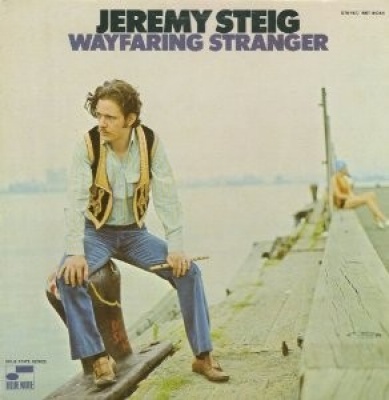
Another artist and human who made a huge impression on me was Jeremy Steig (b. September 23, 1942, in Manhattan; d. April 13, 2016, in Yokohama). I also started listening to him as a schoolboy in Finland in the 1970s. I often biked over to my friend Timo’s house on afternoons to listen to music. We’d have a wide scale, ranging from Edgard Varèse to Eric Dolphy to Frank Zappa, as long as it was novel and interesting. Timo was the one who introduced me to the records of Jeremy Steig and the music hit me like a rock from the very beginning. Both Timo and I were aspiring flute players, so discovering a rare jazz flautist who was as versatile and creative as Steig was a real treat for us. At that time, almost all jazz flutists were primarily saxophonists who doubled on the smaller instrument, but Jeremy Steig was a flutist first. The first record I remember hearing was ‘Wayfaring Stranger’ (1971), which featured a small group of leading contemporary jazz musicians, such as Eddie Gomez and Don Alias, but playing to a funky rock beat. The music was free in a loose format with largely improvised interplay. Again, I went back to older albums by Steig, such as the 1968 ‘Jeremy & The Satyrs’ which embodied the psychedelic spirit of the era.

Jeremy Steig had grown up in the straight jazz tradition and had been on the New York scene since the early-1960s. He released his first album as a leader, ‘Flute Fever’, in 1963. The album featured a traditional piano trio with young Denny Zeitlin. His greatest claim to fame in mainstream modern jazz was, however, ‘What’s New’ recorded with the pianist Bill Evans, backed by Eddie Gomez and Marty Morell, in 1969. The song list consists of standards, such as ‘Straight No Chaser’, ‘Lover Man’ and ‘Autumn Leaves’ but the treatment was novel and the playing enormously creative and interactive. Jeremy later told me how in those days, there were no fancy music schools for jazz musicians to take a shortcut to fame; the only way was just to practice and play and try to get the chance to be accepted to sit in with the established stars in clubs. To me, one of the best collaborations was the rather free form album ‘Outlaws’, recorded in 1976, with just Eddie Gomez on bass and Jeremy Steig on flute and alto flute.

Jeremy Steig’s flute playing was truly unique. He had perfected his jazz chops but then moved more towards a crossover style, adopting techniques that incorporated singing into the flute and ample use of overtones. What contributed to his special sound was a motorbike accident at 19 that left a side of his face paralyzed. He re-learned to play and rebuilt his face muscles, but never fully recovered from the damage. In the 1960s Jeremy would sit in with both jazz and rock groups at live performances in New York’s Greenwich Village. He observed that he could still solo “with integrity” over the funky beats of rock bands. “We decided that we’d invented jazz-rock … Of course, there were about 50 other people who had come to the same conclusion,” he later mused (New York Times, June 2, 2016).
It was in Greenwich Village where I caught Jeremy Steig on one of his rare live appearances in 2007 (see my review of the gig). The gig was amazing, with Jeremy playing as innovative music as ever, alternating between the regular and alto and bass flutes (one of his last records – the 2007 ‘Pterodactyl’ – consisted of only overdubs with flutes of different sizes from piccolo to bass). After the show I went to talk with him and his wife Asako who was acting as his manager. We established a good rapport and followed up with a dinner in a nice restaurant in the Village on another evening not long after. A common element was found in the fact that we both had spent a lot of time in Japan. As it happens, Asako hails from Morioka, not far from my wife’s hometown in the same northern Japanese prefecture, Iwate. Asako and Jeremy established a home in Yokohama, which is where Jeremy passed away.
Over the long dinner we discussed many matters, around and beyond music. Jeremy considered himself retired, “senior citizen”, as he repeatedly mentioned. He hadn’t made new records since the above mentioned ‘Pterodactyl’ and the excellent 2007 quartet recording ‘Flute on the Edge’, both produced and released on his own label. He seldom performed but he continued to paint, which had long been his other artistic passion. In fact, he produced the cover art for several of his albums and lately he and Asako created a series of ‘digital picture books’ with his art. Jeremy’s interests were wide and included politics. I remember him raving about the book, Confessions of an Economic Hit Man by John Perkins, which detailed how American firms had taken over developing countries by convincing them to take huge loans for construction and infrastructure projects.

Sadly, Jeremy Steig never became a household name, even amongst jazz aficionados. Still his music was highly influential in many respects. He made appearances as sideman on recordings by famous artists ranging from Art Farmer and Urbie Green to Johnny Winter and Tommy Bolin. One of my favorites is his performance on a rather obscure, but lovely pop tune, ‘Hurricane’ by Dee Carstensen. As Jeremy would tell, the most money he ever made through his music was in 1994 when the Beastie Boys sampled his 1970 ‘Howlin’ for Judy’ for their hit ‘Sure Shot’.

Wednesday, December 28, 2016

DC Jazz Summer 2016

The Nation’s Capital is a cultural town with the best museums and the Smithsonian Institutions that are all free, the Kennedy Center with its top class performing arts, and a generally well-educated and wealthy populace who take advantage of the opportunities (admittedly, the education and wealth are highly unevenly distributed). In jazz, however, the city can’t compete with New York. Looking back, the summer of 2016 was nevertheless highly satisfying.


Every June sees the DC Jazz Festival in full swing with lots of concerts and live events in different settings. My season started on June 18, when I caught the Mika Mimura group as part of the Jazz Fest. The concert took place at the Japan Information and Culture Center, which has a medium-sized hall styled like an old-fashioned theater. Mika Mimura is a marimba and vibraphone artist born in Osaka, Japan. She has released two CDs under her own name consisting mostly of her own compositions, ‘Precious’ in 2009 and ‘Dreamii’ in 2014. At the JICC she played with a group consisting of the Argentinian guitarist Ignacio Hernandez, and her compatriots Kuriko Tsugawa on bass and Ken Yanabe on percussion. Mika Mimura displayed some impressive mallet work on pieces like‘The Flight of the Bumblebee,’ but was somewhat overshadowed by her mentor, Warren Wolf, whom she had invited to make a guest appearance at the concert. Wolf, a much in demand musician and teacher from Baltimore, displayed such grace, musicality and relaxed charm that his act was hard to compete with. I was also particularly taken by Tsugawa’s bass work that was both subtle and musical. Educated at Berklee College of Music and based in New York, she is a composer and leader in her own right. All in all a highly satisfying evening.

On the following night (June 19) I headed to the Hamilton for a double booking with two of today’s finest Hammond organists, Cory Henry and Joey DeFrancesco. The Hamilton, close to the White House, is one of the best music venues in DC area and, indeed, anywhere. It’s a fairly large space, with tables in front of the stage, a bar on the side towards right, and another bar up the stairs right in front of the stage. The latter is my favored location, but the advantage with the venue is that no matter where you are seated or standing, the view to the stage is unobstructed and the acoustics are very good. So I ordered some wine and got comfortable waiting for the show to start. Cory Henry was a new acquaintance to me but his turned out to be the better part of the evening, at least for me. As the name of his band, The Funk Apostles, would suggest, we were in for some serious funk that night. But the point is that this was not just rhythm music to make you move. Cory Henry’s music is imaginative and creative, the compositions are often complex with intricate harmonies and chord changes. On top of that, Henry’s own playing is both funky and sophisticated at the same time.

As a longer established musician, Joey DeFrancesco was billed as the main attraction of the evening
and the performance was very good. Unfortunately, the more traditional organ trio sounded a bit sedate after the riotous Funk Apostles. DeFrancesco’s organ sound fits well in a nightclub setting and his sidemen, on guitar and drums, performed in a highly skilled fashion in the standard jazz genre. A couple of times the leader would add to the nightclub atmosphere by singing some mellow jazz tunes or taking up his soft blown trumpet. The intensity picked up when he introduced his new tenor sax player. The evening closed with a lengthy jam session when Cory Henry joined the DeFrancesco band on stage. This final interplay with the two virtuoso keyboardists egging each other on was definitely a highlight of the night and received a roaring response from the full house.

On June 22nd the Finnish Embassy hosted an event with Nordic jazz. The modern building on Massachusetts Avenue is exceptionally beautiful, with a high ceiling, simple light wood fixtures and tall windows giving over a forested lot that was still the light green color of early summer. The embassy is also an excellent venue for music due to its good acoustics (and the open wine bar at the side).

First on stage was Sigmar Matthiasson NYC Quartet. The New York based bassist and composer is one of the best known jazz musicians emerging from Iceland. His multinational NYC Quartet consisted of Taulant Mehmeti on guitar, Baden Goyo on piano and Ayman Boujlida on drums. The music was contemplative and dreamlike, broadly in the category that is exemplified by ECM records.

The second performance of the evening was somewhat rougher. The Finnish pianist and composer Mika Pohjola presented a trio with Kyle Struve on drums and Jerome Sabbagh on tenor sax.  The lack of bass took some time to get used to but Mika’s strong left hand was mostly able to fill the void.

On the last week of June I had to travel to Canada for work and subsequently spent three weeks in Japan in July, so there was a month during which I missed whatever Washington could offer music-wise.


Soon upon my return, on July 31, I headed to the Blues Alley in Georgetown where the great  LA-based Poncho Sanchez was making a rare East Coast appearance with his Latin Jazz Band. He told the audience this was his first performance in DC in the past 30 years. I myself last saw him perform in Hollywood in the late-1980s, so this Georgetown reunion was long overdue. This was his last sold out night after several evenings of performances and it turned into a fabulous show. The venerable Blues Alley is a small and intimate venue – Dizzy Gillespie is said to have called it the finest jazz and supper club in the country. It worked perfectly for Poncho’s band, with the leader on congas, percussion and vocals, backed by Joey De Leon (timbales), Rene Camacho (bass), Rob Blake (trumpet and flugelhorn), Robert Hardt (alto and tenor saxophones, flute), Francisco Torres (trombone), Angel Rodriguez (bongos, congas), and Andy Langham (piano). Francisco Torres also serves as the musical director of the band. Blake played some very good trumpet and a lovely solo on the flugelhorn. Hardt shone on the tenor sax, especially in a blues number by Albert King, but it was his beautiful work on the alto sax that particularly caught my ear. He also played one excellent flute solo (I would have liked to hear more). The most innovative player, however, was Andy Langham who was as avant garde as you would ever hear a Latin pianist play. After the show I was so hyper that I couldn’t make myself go straight home. Instead, I crossed M Street and walked up Wisconsin Avenue to El Centro D.F. to wind down with a couple of more glasses of wine in a Latin setting.


On Saturday August the 13th I decided to leave town and headed to the Chesapeake Bay and the small resort town of North Beach. The traffic was heavy as many others had had a similar idea, but I reached the shore well before lunchtime. The weather was brutally hot and humid. The temperature hit +36oC that afternoon and there was absolutely no wind. I was sweating profusely when I found a popular Mexican place, Plaza Mexico, in which to cool down. After my break, I wandered around the beach and watched people swimming in the bay. Then I stumbled upon what was labeled the 1st Annual North Beach Jazz Festival. I entered the small and cozy courtyard – the Yard at 7th Street Market – where the action was. There was a tent where cold beer and hot BBQ were sold. A few tables and chairs were scattered in front of a small stage where a band was playing. There may have been twenty or thirty people in the audience. I found a shady corner and set to listen to the music. 

The first band was fronted by a trumpet player backed by four gentlemen on electric piano, guitar, bass and drums. The music appealed to the audience, myself included, as it swung in a relaxed manner in the summer heat. The predominant mode was 1970s-80s style rock jazz, as exemplified by a decent rendition of Herbie Hancock’s ‘Cantaloupe Island.’


After a short break, another band set up on stage. This one was led by local guitarist, DeonCleanCutt. His two sons belonged to the band as well, the younger playing the drums and the older teenager the trumpet and flugelhorn (he clearly had adopted some of the cool mannerisms of Miles). The fourth member of the band was a bass player from California who was visiting his friend here on East Coast. The bass player no doubt was the most accomplished of the musicians, having performed with such jazz stars as David Murray. The music played by this family group relied more on straight blues and jazz. 

All in all, the festival was an extraordinarily sympathetic event, even if the local bands were nothing spectacular. Mental note: make sure to find out when the 2nd Annual North Beach Jazz Festival takes place next summer.


On August 18, I again got the urge to listen to some live music, so I checked the schedules of the known places in the city to find out that Cyrus Chestnut would be performing at the Blues Alley. So I headed back to Georgetown to catch the later show at 9 pm. Am I ever so glad that I did! The piano trio is a versatile format that gives ample space for the players to stretch out based on their abilities and musical imagination. These are qualities that Cyrus Chestnut is not short of. The sensitive, innovative, open minded, creative, genre bending pianist seems totally unhindered by trivial matters like technique. In his hands, original numbers as well as standards get such a breathtaking treatment that the audience can only gasp in amazement. Again, it was impossible for me to return home without stopping at a bar to calm down.


Then on August 27 it was back to the Hamilton. This time the attraction was Al Di Meola whose Elegant Gypsy meets Romantic Warrior tour was making a one-night stop in the capital. The two-hour musical trip that Al Di Meola treated us to rekindled my enthusiasm for the music of this amazing artist whose music I have to confess I hadn’t really listened to since the 1980s. Despite the complexity and virtuosity, the music at the concert was always warm and lyrical. The band played a lot of new material, including from Di Meola’s fresh album ‘Elysium’ (it is an excellent and beautiful one), although fans would get treated to many of the old favorites as well. 

The concert was divided into three segments. The first part focused on fusion numbers that displayed some of the most advanced playing of the evening. A key member in the band was a tall young black man playing some very inspired electric violin. The second part saw Di Meola switching to an acoustic guitar and the mood changed. The final part was again electric but the focus was on more straightforward jazz rock. The set opened with a powerful version of Led Zeppelin’s ‘Immigrant Song’ in which a wailing violin played the part of Robert Plant. Some beautiful Santanaesque Latin beats followed. The Hamilton’s high ceiling was again raised when the band, which played like a dream, received several standing ovations and a raucous call for an encore, an encore that was highly rewarding.

September 2 was a night that I had prepared for. I had bought the tickets months ago as they became available. Despite the threat of rain, Chicago drew a crowd of some 7,000 to the Wolf Trap in Northern Virginia. Still going strong, Chicago played a two-hour non-stop show to an enthusiastic audience. The band was fronted by the three-man horn section consisting of the original members: Lee Loughnane, James Pankow and Walter Parazaider. The gentlemen have aged graciously but still put up a very vigorous performance, each playing inspired solos as well as the section parts that were as tight as ever. Old tunes from the band’s earliest albums, like ‘Make Me Smile’ followed each other. The original keyboardist, singer and composer Robert Lammm was there, although his role was somewhat more low key than in the past when his distinct keyboard and vocals defined the Chicago sound alongside the horns. The “new” members have not changed the Chicago sound noticeably. The keyboardist Lou Pardini (who joined the band in 2009) played a major role, also as a singer, but more as a substitute for Lamm. The drummer Tris Imboden (joined in 1990) was powerful as Daniel Seraphine in the original setting. He was supplemented by the biggest innovation in current Chicago: a percussionist. Walfredo Reyes Jr., was fabulous and some of the most exciting moments included his solos. The guitarist, Keith Howland (joined in 1995), spent much time upfront creating fiery solos, without copying the original guitarist Terry Kath (who accidentally shot himself in 1978 – what an American way to go). We also heard big hits, such as ‘If You Leave Me Now,’ performed by the bassist Jason Scheff, who channeled Peter Cetera almost perfectly both on vocals and the bass guitar. To me, a much more important ballad was ‘Color My World’ sung by Lee Loughnane and featuring Walter Parazaider’s classic flute solo, which all of us aspiring jazz and rock flutists at the time emulated. The two-hour concert ended with two of the band’s biggest hits from the early period, ‘I’m a Man’ and ’25 or 6 to 4.’ Needless to say, the multitude in the audience went crazy.

As if by some divine intervention, the rain had held itself throughout the concert, but at the moment the music ended the skies broke into a torrential downpour soaking us as we walked out of the park. It was futile even to try to stay dry as the paths and the roads soon turned into ankle-deep wildly flowing streams.

Once I get started it’s hard to stop. My jazz summer continued well into September. No more concerts by big visiting names, but there is local jazz talent who can attract a decent crowd to some of the locales around town. On the day after the Chicago concert, I ventured into Columbia Station, a long-standing club on 18th Street up in Adams Morgan and enjoyed a couple of sets of modern quartet jazz led by Knute, a local tenor sax player. 

A couple of weeks later, on September 24th my regular neighborhood haunt Acacia Bistro hosted a jazz marathon with several local bands. My choice was to listen to Jordon Dixon, a solid tenor saxophonist playing very good post-bop backed by a guitar, bass and drums trio. I had never seen my favorite neighborhood joint so packed.


By now the summer is but a memory and it is hard to imagine the heat as the cold winter winds chill one’s bones. But although the summer is gone, the music remains. Washington, DC may not be New York and one has to make more of an effort to find music, it still is a fine city.